Introduction: Why Most SEO Content Fails (And How to Fix It)
You wrote a great blog post. You added keywords. You published it. But it still doesn’t rank on Google.
Sound familiar?
Here’s the truth most beginners don’t know: keywords alone aren’t enough. What Google really cares about is why someone is searching — not just what they’re typing.
That “why” is called search intent in SEO, and it’s one of the most powerful — yet most overlooked — ranking factors today.
In this guide, you’ll learn exactly what search intent means, why Google takes it so seriously, and how you can use it to create content that actually ranks, gets clicked, and converts.
Whether you’re a blogger, freelancer, student, or someone building an online income — this guide is for you.
Let’s dive in.
What Is Search Intent in SEO? (Simple Definition)
Search intent (also called “user intent” or “keyword intent”) is the reason behind a Google search.
When someone types something into Google, they’re not just looking for words on a page. They’re looking for a specific outcome.
For example:
- Someone searching “what is SEO” wants a simple explanation.
- Someone searching “best SEO tools 2026” wants a comparison to help them decide.
- Someone searching “buy SEMrush subscription” is ready to purchase right now.
Each of these searches has a different intent. And Google’s job is to show the most relevant result for each one.
If your content doesn’t match what the searcher actually wants, Google won’t rank it — no matter how many keywords you use.
Why Search Intent Matters More Than Keywords
Think of Google as a matchmaker. Its entire business depends on connecting searchers with the perfect answer.
When Google trusts that your content gives users exactly what they’re looking for, it rewards you with higher rankings.
Here’s why search intent is so critical:
- Lower bounce rates: When content matches intent, people stay longer.
- Higher engagement: Relevant content gets more shares, comments, and clicks.
- Better conversions: Intent-matched content turns readers into buyers or subscribers.
- Improved rankings: Google’s algorithm is specifically designed to reward intent-matched content.
According to Google’s own documentation, their algorithm evaluates content based on how well it satisfies the user’s needs. That’s search intent in action.
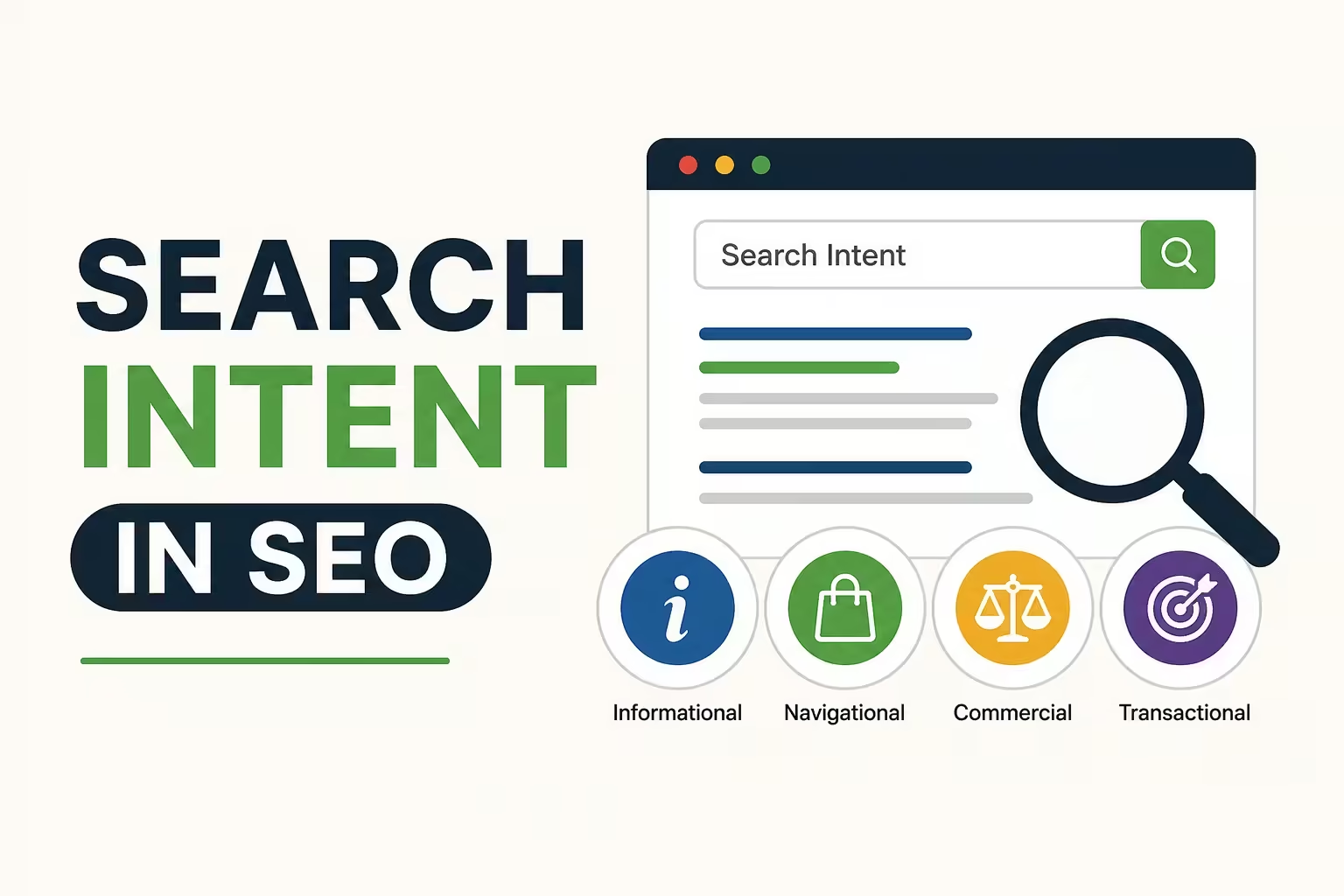
The 4 Main Types of Search Intent in SEO
This is the foundation of everything. Once you understand these four types, you’ll see content creation in a whole new way.
1. Informational Intent
The searcher wants to learn something.
These are the most common searches on the internet. People are curious, researching, or trying to solve a problem.
Examples:
- “How does SEO work”
- “What is a backlink”
- “How to start a blog for free”
- “Search intent in SEO explained”
Best content format: Blog posts, how-to guides, tutorials, YouTube videos, infographics.
Monetization tip: This is perfect for building email lists, promoting affiliate products, and building authority.
2. Navigational Intent
The searcher wants to find a specific website or page.
They already know where they want to go. They’re just using Google as a shortcut.
Examples:
- “YouTube login”
- “Ahrefs blog”
- “Neil Patel SEO guide”
- “Amazon customer service”
What you should know: You can’t really “compete” for navigational searches unless it’s for your own brand. Focus your energy elsewhere — especially if you’re just starting out.
3. Commercial Investigation Intent
The searcher is comparing options before making a decision.
They’re not quite ready to buy, but they’re getting close. They want reviews, comparisons, and recommendations.
Examples:
- “Best blogging platforms for beginners”
- “Ahrefs vs SEMrush”
- “Top affiliate programs for beginners”
- “SiteGround vs Bluehost review”
Best content format: Comparison posts, listicles, reviews, “best of” articles.
Monetization tip: This is a goldmine for affiliate marketing. These searchers are warm leads — they’re almost ready to spend money.
4. Transactional Intent
The searcher is ready to take action — usually to buy something.
These are high-value searches. The person has made up their mind and just needs to find the right place to complete the action.
Examples:
- “Buy Grammarly premium”
- “Enroll in SEO course online”
- “Download free keyword research tool”
- “Sign up for Kit free trial”
Best content format: Product pages, landing pages, sales pages, sign-up pages.
Monetization tip: If you’re running an online store, SaaS product, or course — this is where your conversions happen. Target these with precision.
How to Identify Search Intent for Any Keyword (Step-by-Step)
Here’s the good news: you don’t need expensive tools to figure out search intent. You just need to read the signals.
Step 1: Google the Keyword Yourself
This is the fastest and most reliable method. Look at:
- What types of pages rank on page one? (Blog posts, product pages, videos?)
- What do the titles look like? (How-to guides? Listicles? Reviews?)
- What does the “People Also Ask” section show? (This reveals related intent.)
If the top 10 results are all “Best X for Beginners” listicles — that’s your signal. Google has already determined what format works best for that keyword.
Step 2: Analyze the Content Format
Pay attention to how top-ranking content is structured:
| Signal | What It Means |
|---|---|
| Most results are how-to posts | Informational intent |
| Results show product comparison tables | Commercial investigation intent |
| Results include buy buttons or sign-up CTAs | Transactional intent |
| Results are all official brand pages | Navigational intent |
Step 3: Check the URL Patterns
URLs tell you a lot. Notice patterns like:
/blog/how-to-...→ Informational/reviews/best-...→ Commercial investigation/buy/or/shop/→ Transactional
Step 4: Use Free Tools
These tools help confirm intent:
- Google Search Console — See what queries bring people to your site
- Ubersuggest — Shows intent labels next to keywords
- Keywords Everywhere — Browser extension with intent data
- AnswerThePublic — Shows question-based searches (great for informational intent)
How to Optimize Your Content for Search Intent
Now that you know what search intent is, let’s talk about how to use it in your content strategy.
Match the Content Type
Don’t write a long-form blog post for a transactional keyword. And don’t create a product page for an informational keyword. Mirror what’s already ranking.
Example: If someone searches “how to do keyword research,” they want a step-by-step tutorial — not a sales page for a keyword tool.
Match the Content Format
Beyond content type, the format matters too:
- Informational intent → Use numbered steps, FAQs, clear headings
- Commercial intent → Use comparison tables, pros and cons, ratings
- Transactional intent → Use clear CTAs, pricing info, trust signals
Match the Content Depth
How long should your content be? Look at what’s ranking.
If the top results are 1,500-word blog posts, don’t write 300 words — but don’t pad it to 5,000 words either. Match the depth that already satisfies users.
Write Titles That Match Intent
Your title is the first signal Google and users see. Make sure it reflects the searcher’s goal.
Examples:
- For informational intent: “What Is Search Intent in SEO? (Beginner’s Guide)”
- For commercial intent: “Best SEO Tools for Beginners: 10 Honest Reviews”
- For transactional intent: “Get Started with Ahrefs — Free 7-Day Trial”
Common Search Intent Mistakes to Avoid
Even experienced content creators get this wrong. Watch out for these pitfalls:
Mistake #1: Targeting the wrong intent
Writing a product review when someone wants a how-to tutorial. This kills your rankings before you start.
Mistake #2: Ignoring the SERP (search results page)
Never assume you know the intent. Always check Google first. It will show you exactly what’s working.
Mistake #3: Mixing intents confusingly
Trying to sell something inside a purely informational article can frustrate readers. Keep the primary intent clear, and add secondary monetization subtly.
Mistake #4: Outdated content that no longer matches intent
Search intent can evolve over time. A keyword that used to have informational intent might now have commercial intent. Update old content regularly.
Mistake #5: Keyword stuffing instead of intent matching
Repeating your keyword 50 times does nothing. Google cares about relevance, not keyword density.
Search Intent and Monetization: How to Make Money With Intent-Based Content
If you’re building an online income — through blogging, freelancing, or affiliate marketing — search intent is your secret weapon.
Here’s a simple framework:
Top of Funnel (Informational Intent)
- Write educational content
- Build trust and grow your email list
- Use lead magnets (free guides, templates, checklists)
- Example: “How to Start a Blog and Make Money”
Middle of Funnel (Commercial Investigation Intent)
- Write reviews and comparisons
- Use affiliate links
- Recommend tools you genuinely use
- Example: “Best Email Marketing Tools for Beginners”
Bottom of Funnel (Transactional Intent)
- Create landing pages and sales pages
- Offer direct products, services, or courses
- Use strong CTAs and trust signals
- Example: “Join My Freelance Writing Course — Enroll Today”
By mapping your content to the buyer journey using search intent, you create a system that attracts, educates, and converts — all on autopilot.
⚠️ Warning: Watch Out for These Common Myths
Before you go and rewrite all your content, here are a few things to be careful about:
- “Just matching intent guarantees rankings” — Not true. You still need quality content, backlinks, and technical SEO.
- “More content = better rankings” — Wrong. Relevance beats length every time.
- “Transactional keywords are always the most profitable” — Not necessarily. Informational content can earn just as much through affiliate links and ads if it gets high traffic.
- “You only need to optimize once” — Search intent shifts. Review your content every 6–12 months.
Examples of Search Intent in Action
Let’s make this even more concrete with real examples:
Example 1:
Keyword: “how to lose weight fast”
Intent: Informational
Best format: A listicle or how-to guide with tips, not a product sales page.
Example 2:
Keyword: “best web hosting for beginners”
Intent: Commercial investigation
Best format: A comparison post reviewing 5–10 hosting options, with affiliate links.
Example 3:
Keyword: “buy Bluehost hosting”
Intent: Transactional
Best format: A simple landing page with a clear CTA and discount offer.
Example 4:
Keyword: “Canva login”
Intent: Navigational
Best strategy: Don’t try to rank for this. Focus on other keywords.
Quick Action Checklist: Implement Search Intent Today
Here’s what you can do right now:
- Pick 5 keywords you’re currently targeting
- Google each one and look at what’s ranking
- Identify the intent type (informational, commercial, navigational, transactional)
- Compare your content format to the top-ranking results
- Rewrite titles, introductions, and formats to match intent
- Add internal links to related content on your site
- Use tools like Ubersuggest or Google’s “People Also Ask” for deeper research
- Set a reminder to review old content every 6 months
Conclusion: Master Search Intent in SEO to Win on Google
Here’s the bottom line: search intent in SEO is not optional anymore — it’s essential.
Google has become incredibly good at understanding what people really want when they search. If your content doesn’t deliver that, it won’t rank. Period.
But the good news? Most of your competitors are still focused only on keywords. By understanding and matching search intent, you immediately gain a competitive edge.
Start small. Pick one piece of content. Check the intent. Optimize accordingly. Then repeat.
Over time, this single habit will do more for your Google rankings — and your online income — than almost anything else you can do in SEO.
Now go open a new tab, Google one of your target keywords, and see what intent it really has. Your rankings depend on it.
Frequently Asked Questions (FAQs)
Q1: What is search intent in SEO in simple words?
Search intent is the reason why someone makes a Google search. It’s the goal or need behind the query — whether someone wants to learn, compare, buy, or find a specific website.
Q2: Why is search intent important for SEO?
Google’s algorithm is built to match search results with user intent. If your content doesn’t satisfy what the searcher is looking for, Google won’t show it — no matter how well-optimized it is.
Q3: How many types of search intent are there?
There are four main types: informational, navigational, commercial investigation, and transactional. Each requires a different content approach.
Q4: How do I find the search intent for a keyword?
The easiest method is to Google the keyword and study the top results. Look at the content types, formats, and titles that appear. You can also use tools like Ubersuggest, Ahrefs, or Keywords Everywhere.
Q5: Can one keyword have multiple intents?
Yes, sometimes a keyword can have mixed intent. In that case, try to address the dominant intent while touching on secondary needs within the same content.
Q6: Does search intent affect affiliate marketing?
Absolutely. Commercial investigation keywords (like “best X for beginners”) are ideal for affiliate content because searchers are ready to make decisions. Matching intent here dramatically increases click-through rates and conversions.
Q7: How often should I re-check search intent for my content?
At least every 6–12 months. Search intent can shift as user behavior, technology, and Google’s algorithm evolve. Outdated intent matching is a common cause of ranking drops.
Q8: Is search intent the same as keyword intent?
Yes, these terms are used interchangeably. Both refer to the underlying goal or motivation behind a search query.
Recommended posts:
- How to Write SEO Titles That Actually Rank on Google (Beginner’s Guide)
- What Is E-E-A-T in SEO? The Complete Beginner’s Guide (2026)
- SEO Tips for New Bloggers: The Complete Beginner’s Guide to Ranking on Google
- How to Write Meta Descriptions That Boost Your Click-Through Rate (Complete Guide)
- AI Tools for Website Creation: The Ultimate Beginner’s Guide (2026)
- Online Business Models Explained: The Complete Beginner’s Guide (2026)