Introduction: Why Your SEO Title Is the Most Important Line You’ll Ever Write
You could write the best blog post in the world. But if your SEO title is weak, nobody will ever read it.
Your title is the first thing Google shows in search results. It is also the first thing a real person sees before deciding whether to click or scroll past. That one line of text can make or break your traffic.
Learning how to write SEO titles is one of the most powerful skills you can develop as a blogger, freelancer, entrepreneur, or content creator. It costs nothing. It takes minutes. And it can double your organic traffic almost overnight.
In this guide, you will learn exactly how to write SEO titles that rank on Google, attract clicks, and help you grow your online presence — even if you are a complete beginner.
Let’s dive in.
What Is an SEO Title and Why Does It Matter?
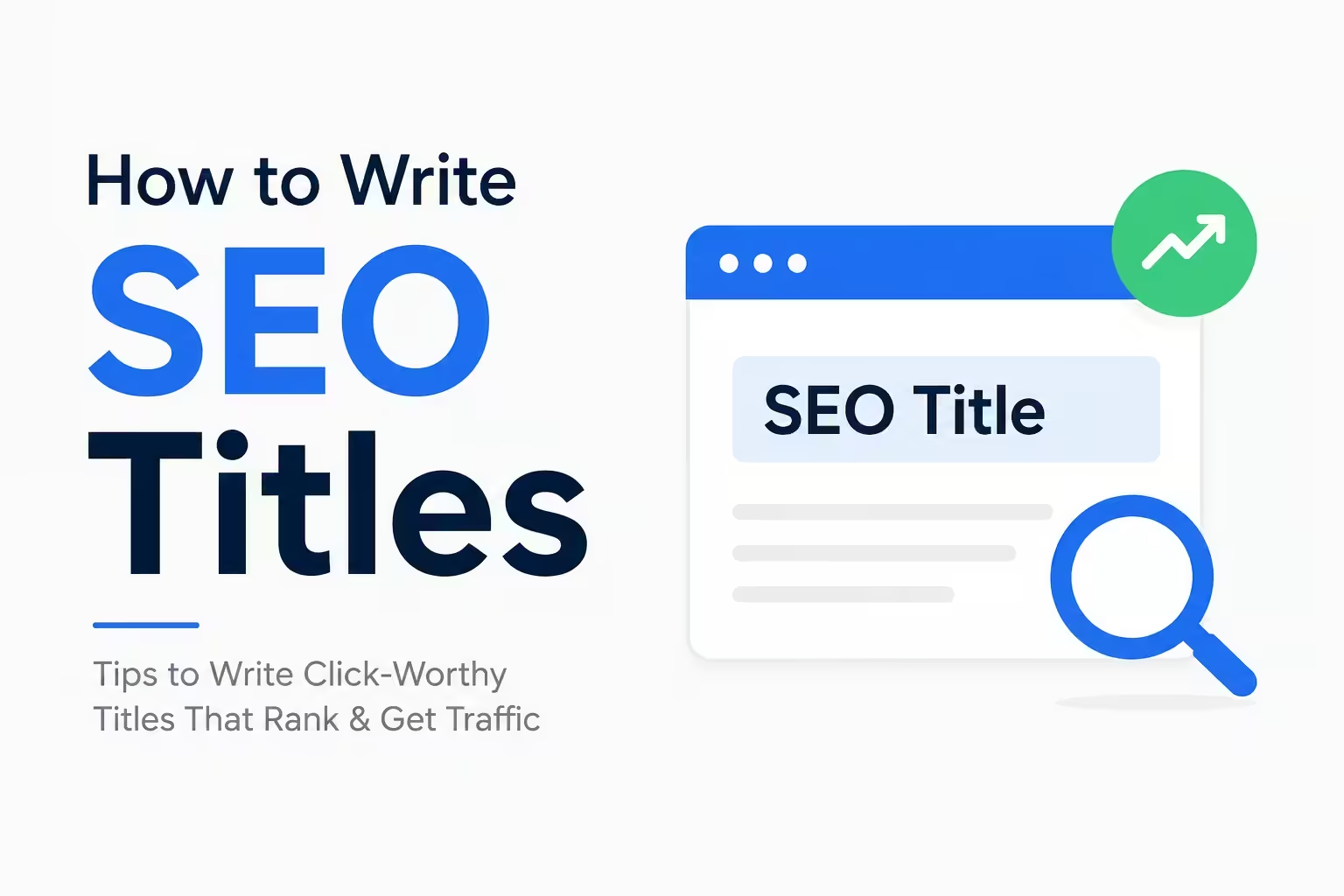
An SEO title, also called a title tag, is the clickable headline that appears in Google search results. It tells both Google and human readers what your page is about.
Here is why it matters so much:
- Google uses it as a ranking signal. Your title helps Google understand your content’s topic and relevance.
- It controls your click-through rate (CTR). A compelling title gets more clicks, which sends positive signals back to Google.
- It sets expectations. A clear title tells readers exactly what they will get if they click.
Think of your SEO title as the headline on a newspaper front page. If it doesn’t grab attention immediately, people move on.
Example:
Weak title: Blog Post About Titles
Strong SEO title: How to Write SEO Titles That Rank on Google (Step-by-Step Guide)
The difference is obvious. The second one is specific, keyword-rich, and tells you exactly what value you will receive.
How Long Should an SEO Title Be?
This is one of the most common questions beginners ask, and the answer is simple.
Your SEO title should be between 50 and 60 characters long. Google typically cuts off titles that are longer than 60 characters in search results, replacing the rest with “…”
Here are the key rules:
- Minimum: 40 characters (anything shorter may lack context)
- Sweet spot: 50–60 characters
- Maximum: 60 characters before Google truncates it
Pro tip: Use a free tool like CoSchedule Headline Analyzer or Moz Title Tag Preview to check your character count before publishing.
Example:
Too long: How to Write Amazing SEO Titles That Will Help You Rank Higher on Google in 2024 and Beyond
(94 characters — Google will cut this off)
Just right: How to Write SEO Titles That Rank on Google (2024)
(52 characters — perfect)
The Golden Rules for Writing SEO Titles That Rank
Now let’s get into the actual strategy. Follow these rules every single time you write a title.
Rule 1: Put Your Primary Keyword First (or Close to First)
Google gives more weight to words that appear early in your title. This is called keyword front-loading, and it works.
Example:
Instead of: Tips for People Who Want to Learn How to Write SEO Titles
Write: SEO Titles: How to Write Them the Right Way
Your primary keyword should appear as close to the beginning of the title as possible without sounding awkward.
Rule 2: Match Search Intent Exactly
Search intent means the reason behind a person’s Google search. Are they trying to learn something? Buy something? Compare options?
Google is very good at detecting intent. If your title doesn’t match what the searcher actually wants, you will not rank — no matter how well-optimized the rest of your post is.
There are four main types of search intent:
- Informational: “How to write SEO titles” (they want to learn)
- Navigational: “Yoast SEO plugin” (they want a specific site)
- Transactional: “Buy SEO course” (they want to purchase)
- Commercial: “Best SEO tools 2024” (they are comparing before buying)
Example: If someone searches “how to write SEO titles,” they want a practical guide — not a product page. Your title should reflect that by using words like “how to,” “guide,” “tips,” or “step-by-step.”
Rule 3: Use Power Words to Increase Clicks
Power words are emotional or persuasive words that make people want to click. Adding just one or two power words to your title can significantly increase your click-through rate.
Here are power words that work well in SEO titles:
- Urgency: Fast, Quick, Now, Today, Instantly
- Value: Free, Easy, Proven, Simple, Actionable
- Authority: Ultimate, Complete, Expert, Definitive
- Curiosity: Secret, Surprising, Little-Known, Rarely Talked About
- Specificity: Step-by-Step, Beginner’s, In 10 Minutes, Without Experience
Example:
Basic: How to Write SEO Titles
Improved: How to Write SEO Titles That Actually Rank (Beginner’s Step-by-Step Guide)
The improved version uses “actually,” “rank,” “beginner’s,” and “step-by-step” — all power words that create more interest.
Rule 4: Include a Number When It Makes Sense
Numbered titles consistently outperform non-numbered titles. Numbers create a sense of structure and set clear expectations.
Examples:
- 7 Ways to Write SEO Titles That Drive Traffic
- 10 SEO Title Formulas Every Blogger Should Know
- 5 Mistakes to Avoid When Writing SEO Titles
Odd numbers (like 5, 7, 9, 11) tend to get higher click-through rates than even numbers, according to multiple content marketing studies.
Rule 5: Make a Promise and Deliver on It
Your title is essentially a promise to the reader. It says, “Click here and you will get THIS result.”
The problem many beginners make is over-promising in the title and under-delivering in the content. This destroys trust and increases your bounce rate, which hurts your rankings.
Good promise: How to Write SEO Titles in Under 5 Minutes (With Examples)
This title promises speed, a specific skill, and real examples. If your article actually delivers all three, you are golden.
SEO Title Formulas That Work Every Time
You do not need to reinvent the wheel every time you write a title. Use these proven formulas:
Formula 1: How to [Achieve Desired Result] [Timeframe or Qualifier]
Example: How to Write SEO Titles That Rank in 30 Days
Formula 2: [Number] Ways/Tips/Strategies to [Achieve Goal]
Example: 8 Proven Tips for Writing SEO Titles That Get Clicks
Formula 3: The [Adjective] Guide to [Topic] for [Audience]
Example: The Beginner’s Guide to Writing SEO Titles for Bloggers
Formula 4: [Topic]: What It Is and How to [Use It / Do It]
Example: SEO Titles: What They Are and How to Write Them Correctly
Formula 5: [Number] [Topic] Mistakes and How to Fix Them
Example: 7 SEO Title Mistakes That Are Killing Your Traffic (And How to Fix Them)
Keep these formulas saved somewhere. They will save you hours every week.
Common SEO Title Mistakes to Avoid
Even experienced bloggers make these mistakes. Check your titles against this list before publishing.
Mistake 1: Keyword Stuffing
Stuffing your keyword into the title multiple times looks spammy and hurts your rankings.
Bad: SEO Titles, How to Write SEO Titles, Best SEO Titles 2024
Good: How to Write SEO Titles That Rank on Google (2024 Guide)
Mistake 2: Being Too Vague
Vague titles do not tell Google or readers what your content covers.
Bad: Tips for Better Blogging
Good: 12 Blogging Tips That Will Double Your Traffic in 90 Days
Mistake 3: Ignoring Your Audience
Your title should speak directly to the people you are trying to reach.
Bad: A Discussion on Search Engine Optimization Title Strategy
Good: How to Write SEO Titles: A Complete Guide for Beginners
Mistake 4: Writing for Google Instead of Humans
This is a trap many beginners fall into. Yes, you need to include your keyword. But the title must also appeal to real human emotions, curiosity, and needs.
A title that is keyword-perfect but boring will get low clicks — and low clicks hurt your ranking.
Mistake 5: Forgetting to Update Old Titles
If you have old blog posts with weak titles, go back and update them. Refreshing titles on old content is one of the fastest ways to improve your organic traffic without writing anything new.
How to Write SEO Titles for Different Types of Content
The approach to writing SEO titles changes slightly depending on what kind of content you are creating.
Blog posts and guides: Use “how to,” “guide,” or “tips” to match informational intent.
Example: How to Start a Blog and Make Money in 2024
Listicles: Lead with a number.
Example: 15 Side Hustles You Can Start With Zero Money
Product reviews: Include the product name, year, and a qualifier.
Example: Jasper AI Review 2024: Is It Worth It for Bloggers?
Comparison posts: Use “vs” to signal commercial intent.
Example: WordPress vs Wix: Which One Is Better for Beginners?
Problem/solution posts: Address the pain point directly.
Example: Why Your Blog Isn’t Getting Traffic (And How to Fix It)
Tools That Help You Write Better SEO Titles
You do not need to guess if your titles are good. Use these free and paid tools:
- Google Search Console: Shows you which titles are getting clicks and which are being ignored.
- CoSchedule Headline Analyzer: Scores your headline based on emotional value, power words, and clarity.
- Moz Title Tag Preview: Shows you exactly how your title will appear in Google search results.
- Ahrefs / SEMrush: Help you find keyword search volume so you can choose the right primary keyword for your title.
- Google autocomplete: Type your keyword into Google’s search bar and note the suggestions. These are real searches and can inspire powerful title ideas.
Quick Checklist: Before You Publish, Ask Yourself These Questions
Use this as your go-to checklist every time you write a new SEO title:
- Is my primary keyword included naturally?
- Is the title 50–60 characters long?
- Does it match the search intent of my target keyword?
- Have I used at least one power word?
- Does it make a clear promise to the reader?
- Is it specific (not vague)?
- Does it speak to my target audience?
- Would I personally want to click this title if I saw it in Google?
If you can answer yes to all of these, your title is ready to publish.
Conclusion: Mastering How to Write SEO Titles Is a Game-Changer
Learning how to write SEO titles is one of the simplest and highest-impact skills in the world of digital marketing and blogging.
It does not require expensive tools or advanced technical knowledge. It just requires understanding how Google thinks, how people search, and how to combine your keyword with genuine value and emotion.
Start small. Go back to your last five blog posts and rewrite the titles using the formulas and rules in this guide. Then track your results in Google Search Console over the next 30 days. You will likely be surprised by how much a single line of text can change your traffic.
The best part? This skill compounds. Every post you write from now on will benefit from it. And as your traffic grows, so do your monetization opportunities — whether that is affiliate income, ad revenue, freelance clients, or digital product sales.
Master your titles. Master your traffic.
FAQs: How to Write SEO Titles
Q1: What makes a good SEO title?
A good SEO title includes your primary keyword naturally, is 50–60 characters long, matches the search intent of your audience, uses a power word or emotional trigger, and makes a specific promise to the reader.
Q2: Where should I put my keyword in the SEO title?
Put your primary keyword as close to the beginning of the title as possible. This is called keyword front-loading, and it helps Google understand your content’s main topic immediately.
Q3: Can a bad title hurt my Google rankings?
Yes, absolutely. A weak title leads to a low click-through rate (CTR). A low CTR signals to Google that your result is not satisfying searchers, which can cause your ranking to drop over time.
Q4: How do I find the right keywords for my SEO title?
Use tools like Google autocomplete, Google Keyword Planner, Ubersuggest, or Ahrefs to find keywords with decent search volume and manageable competition. Focus on long-tail keywords if you are a beginner, as they are easier to rank for.
Q5: Is it okay to change my SEO title after publishing?
Yes. You can and should update your title if it is not performing. Just go into your CMS (like WordPress), update the title tag via your SEO plugin (like Yoast or Rank Math), and save. Google will crawl the update within days or weeks.
Q6: Should I write my title for Google or for readers?
Both. Your title needs to include the right keyword for Google, but it also needs to be compelling enough for a real human to want to click. The best SEO titles do both naturally without sounding robotic or forced.
Q7: Should my SEO title and blog post headline be different?
Yes, they can be different. Your SEO title (title tag) appears in Google search results and browser tabs. Your blog post headline (H1) appears at the top of your article. They can match, but it is perfectly fine for them to be slightly different. Many bloggers use a slightly longer or more creative H1 while keeping the title tag tighter and keyword-focused.
Q8: How often should I update my SEO titles?
Review your titles every 3–6 months. If a post is not ranking or getting clicks, test a new title. Google Search Console will show you your current CTR so you know what needs improvement.
Q9: Does capitalization affect SEO titles?
Capitalization does not directly affect rankings. However, title case (capitalizing the first letter of each major word) generally looks more professional and tends to get more clicks. Avoid writing titles in all caps as it looks like spam.
Q10: Can I use special characters or emojis in SEO titles?
Some characters like hyphens, colons, and pipes ( | ) are commonly used in SEO titles and work well. Emojis are sometimes displayed in search results but can be unpredictable. Stick to text for professional blog content.
Q11: What is the difference between a title tag and a meta description?
Your title tag is the blue clickable text in Google results. Your meta description is the short summary that appears below it. Both matter for SEO and click-through rate, but the title tag has a more direct impact on rankings.
Recommended posts:
- Best Blog Monetization Methods for Beginners: How to Make Money Blogging in 2026
- What Is E-E-A-T in SEO? The Complete Beginner’s Guide (2026)
- The Ultimate AI Prompt Writing Guide: How to Get Better Results From Any AI Tool
- Ways Content Creators Make Money: The Complete Beginner’s Guide (2026)
- Affiliate Disclosure Guide: What It Is, Why You Need It, and How to Write One (2026)
- Online Business Models Explained: The Complete Beginner’s Guide (2026)