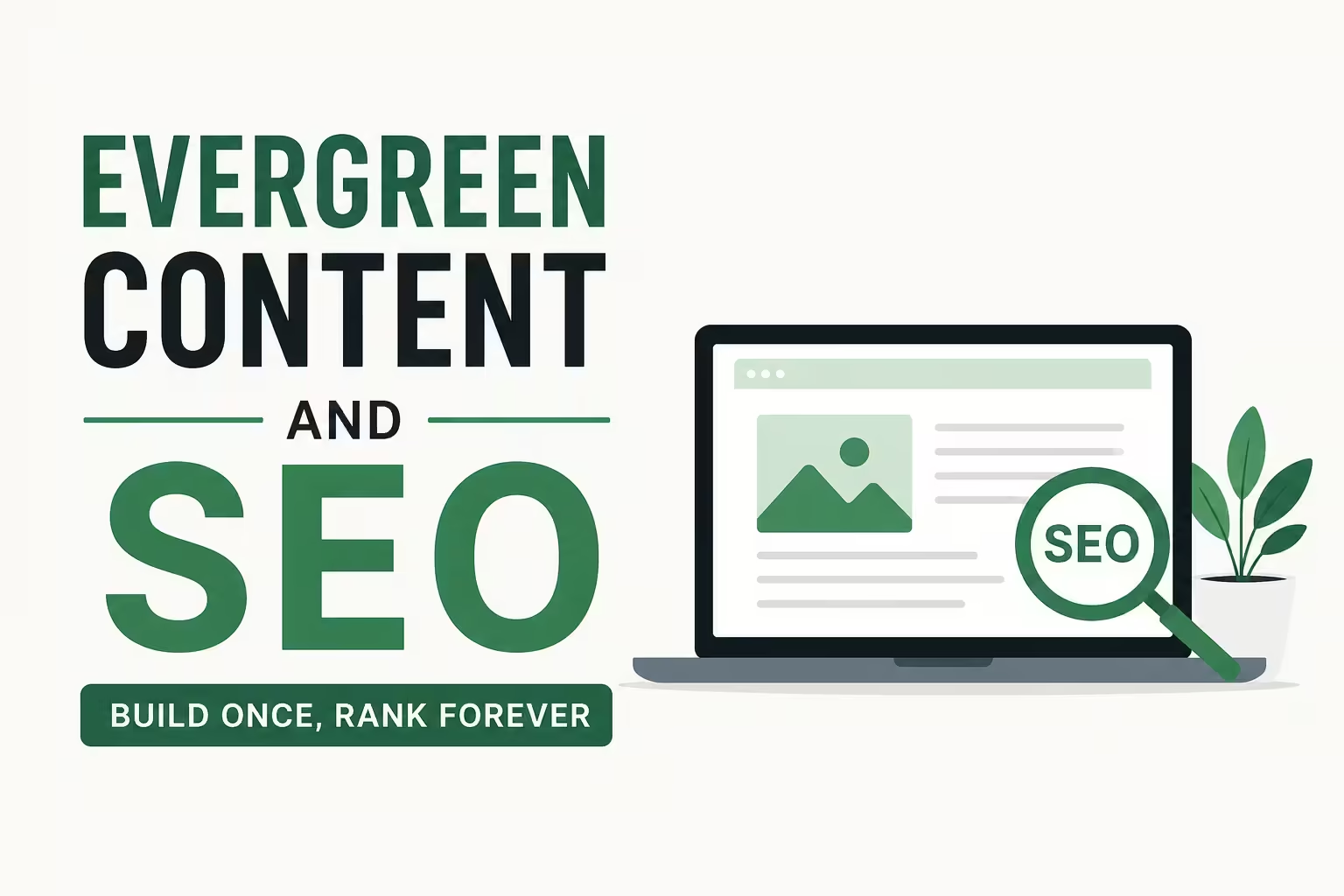
Introduction: What If Your Content Could Work for You While You Sleep?
Imagine writing a blog post once and having it bring you traffic, leads, and income for the next three, five, or even ten years.
That’s not a fantasy. That’s the power of evergreen content and SEO working together.
If you’re a blogger, freelancer, student, or someone trying to grow an online business, understanding evergreen content is one of the smartest moves you can make. It’s the foundation of long-term organic traffic, and it doesn’t require a big budget or years of experience.
In this guide, you’ll learn exactly what evergreen content is, why Google loves it, how to create it, and how to use it to build a steady online income. Let’s dive in.
Find similar posts in SEO category.
What Is Evergreen Content? (And Why the Name?)
Evergreen content is content that stays relevant and useful over a long period of time. Just like an evergreen tree that keeps its leaves all year round, evergreen content doesn’t go out of date quickly.
Compare that to news articles, trending topics, or seasonal posts. Those get a spike in traffic and then die off. Evergreen content keeps attracting visitors month after month, year after year.
Examples of evergreen content:
- “How to Start a Blog for Beginners”
- “What Is SEO and How Does It Work?”
- “10 Best Ways to Save Money Every Month”
- “How to Write a Resume with No Experience”
Examples of content that is NOT evergreen:
- “Top Social Media Trends in March 2024”
- “Best Black Friday Deals This Weekend”
- “What Happened at the 2023 Oscars”
See the difference? Evergreen topics answer timeless questions that people will always be searching for.
Why Evergreen Content Is a Game-Changer for SEO
SEO (Search Engine Optimization) is all about getting your content to rank higher on Google. And evergreen content is one of the best SEO strategies out there — especially for beginners with limited time and resources.
Here’s why:
1. It compounds over time.
A trending post might get 10,000 views in a week and then nothing. An evergreen post might get 500 views a month and grow to 5,000 visits a month over time. That’s compound traffic, similar to compound interest in investing.
2. It builds domain authority.
When people consistently find your content useful, they link to it. Backlinks are one of Google’s top ranking factors. Evergreen content naturally attracts backlinks over time because it remains valuable.
3. It reduces your content workload.
Instead of constantly chasing new trends, you invest deeply in a few high-quality, timeless pieces. You update them occasionally, but you don’t start from zero every time.
4. It supports monetization.
Whether you earn through affiliate links, ads, digital products, or services, evergreen content keeps your monetization channels active without ongoing effort.
How to Find Great Evergreen Content Ideas
Finding the right topic is the first step. You want topics that people search for consistently, not just during certain seasons or events.
Here’s how to find evergreen ideas:
Use Google’s “People Also Ask” feature.
Search any topic in your niche and look at the questions that appear in the dropdown box. These are real questions people ask all the time. They’re goldmines for evergreen content.
Use free keyword tools.
Tools like Google Keyword Planner, Ubersuggest, and AnswerThePublic show you what people search for regularly. Look for topics with steady monthly search volume, not just spikes.
Look at your competitors.
Find blogs in your niche. Which posts get the most traffic and backlinks? Tools like Ahrefs or Moz (with free trials) can show you this. If your competitors have old posts still ranking, that topic is likely evergreen.
Ask your audience.
If you have an email list or social media following, ask what questions they struggle with most. Real questions from real people often point to the best evergreen topics.
Types of evergreen content that consistently perform well:
- How-to guides and tutorials
- Beginner’s guides
- Definition posts (“What Is X?”)
- Ultimate resource lists
- FAQs on popular topics
- Comparison posts (“X vs. Y”)
- Common mistakes and how to avoid them
How to Write Evergreen Content That Ranks on Google
Writing evergreen content is not just about picking a timeless topic. You also need to write it well, structure it properly, and optimize it for search engines. Here’s a step-by-step process:
Step 1: Do Keyword Research First
Before you write a single word, find out what words and phrases people actually type into Google related to your topic.
For example, if your topic is “starting a blog,” related keywords might include:
- “how to start a blog for beginners”
- “how to start a blog and make money”
- “best blogging platforms for beginners”
- “how to write your first blog post”
Use your primary keyword in your title, first paragraph, a few headings, and your conclusion. Sprinkle related keywords naturally throughout the content.
Warning: Don’t stuff your article with keywords. Google is smart enough to detect that, and it will hurt your rankings. Write for humans first, search engines second.
Step 2: Write a Strong, Clear Title
Your title is the first thing both Google and readers see. Make it clear, specific, and benefit-driven.
Weak title: “Content Tips”
Strong title: “Evergreen Content and SEO: How to Write Posts That Rank for Years”
Include your primary keyword close to the beginning of the title if possible.
Step 3: Structure Your Article for Readability
Google uses something called RankBrain to measure how people interact with your content. If readers leave quickly, that’s a bad signal. If they stay and engage, Google pushes your content higher.
Structure your content to keep readers engaged:
- Use short paragraphs (2–4 lines maximum)
- Use H2 and H3 headings to break up sections
- Add bullet points and numbered lists
- Include bold text for key points
- Use simple, clear language (aim for a Grade 6–8 reading level)
Step 4: Cover the Topic Comprehensively
The number one way to outrank competing pages is to be more helpful than them. Don’t just skim the surface. Answer every question your reader might have about the topic.
Think about:
- What is this topic?
- Why does it matter?
- How do I do it, step by step?
- What mistakes should I avoid?
- What tools or resources do I need?
- What results can I expect?
When you answer all of these questions in one article, you become the go-to resource. Google rewards comprehensive content with higher rankings.
Step 5: Add Internal Links
Internal linking means linking to other relevant posts on your own blog. This helps readers explore more of your content and tells Google how your pages are connected.
For example, if you’re writing about evergreen content and SEO, you might internally link to:
- A post about keyword research basics
- A guide on how to write blog posts
- A tutorial on how to grow blog traffic
This keeps people on your site longer and improves your overall SEO performance.
Step 6: Optimize for Featured Snippets
Featured snippets are the boxes that appear at the very top of Google search results, above all other links. Getting into a featured snippet can dramatically increase your traffic.
To optimize for featured snippets:
- Answer questions clearly and concisely near the top of your article
- Use short, direct definitions (under 60 words)
- Use numbered lists for step-by-step processes
- Use tables for comparisons
For example, if someone searches “what is evergreen content,” Google might pull a clean two-sentence definition from your article into the featured snippet box.
Evergreen Content vs. Trending Content: What’s Better?
This is a question many bloggers ask. The honest answer is: both have a place in your strategy, but evergreen content should be your foundation.
Evergreen content pros:
- Long-lasting traffic
- Builds authority over time
- Lower maintenance
- Supports passive income
Evergreen content cons:
- Takes time to rank (usually 3–6 months)
- May not go viral quickly
- Needs occasional updating
Trending content pros:
- Can drive quick spikes in traffic
- Good for social sharing and engagement
- Shows you’re current and active
Trending content cons:
- Traffic fades fast
- Requires constant effort
- Hard to build long-term value
The smart strategy: Use evergreen content for 70–80% of your content calendar and use trending content occasionally to stay relevant.
How to Monetize Evergreen Content
Here’s the exciting part. Because evergreen content drives consistent traffic, it’s an ideal vehicle for multiple income streams.
1. Affiliate marketing.
Add affiliate links to products or services you genuinely recommend. Since your evergreen content keeps getting traffic, your affiliate commissions keep coming in even months after you published the post.
Example: A beginner’s guide to email marketing could include affiliate links to email tools like ConvertKit or Mailchimp.
2. Display ads.
If your blog gets enough traffic, you can apply to ad networks like Google AdSense, Mediavine, or Ezoic. Every page view earns you ad revenue. More evergreen traffic equals more ad income.
3. Digital products.
Your evergreen content can serve as a funnel to sell eBooks, templates, online courses, or printables. If someone reads your guide on freelancing and finds it helpful, they’re more likely to buy your freelancing starter kit.
4. Services.
If you’re a freelancer or consultant, evergreen content builds your credibility. A photographer, copywriter, or web designer who blogs about their craft will attract clients organically through search.
5. Email list building.
Use your evergreen content to grow your email list by offering a related freebie (lead magnet) in exchange for someone’s email address. Your email list is an asset you own, unlike social media followers.
How to Update Evergreen Content for Continued SEO Success
Even though evergreen content is designed to last, it’s not completely maintenance-free. Google rewards fresh, updated content. Here’s how to keep your evergreen posts performing:
- Review your top posts every 6–12 months
- Update statistics, examples, and outdated links
- Add new sections if the topic has evolved
- Improve readability based on user feedback
- Update the published date after major updates
Pro tip: When you update an old post, share it again on social media and in your email newsletter. This gives old content a fresh burst of traffic.
Common Mistakes to Avoid With Evergreen Content
Many beginners make these mistakes when starting out. Learn from them so you don’t waste time and effort.
Mistake 1: Choosing overly broad topics.
“Marketing” is not an evergreen content idea. It’s too vague. “How to Market Your Small Business on a Zero Budget” is specific, searchable, and evergreen.
Mistake 2: Ignoring SEO basics.
Writing great content without doing keyword research is like opening a store in the middle of the jungle. Nobody finds it. Always research before you write.
Mistake 3: Never updating content.
Even the best evergreen posts need a refresh. Outdated stats, broken links, and old examples can hurt your rankings.
Mistake 4: Expecting overnight results.
SEO takes time. A new blog post might take 3–6 months to rank on Google. That’s normal. Don’t give up too early.
Realistic expectation: Evergreen content is a long-term investment. The results are real, but they take patience.
Conclusion: Start Building Your Evergreen Content Strategy Today
Evergreen content and SEO are the two most powerful tools available to anyone who wants to build long-term traffic and income online. Whether you’re a student, side hustler, blogger, or entrepreneur, this strategy works.
You don’t need a big team. You don’t need a huge budget. You need consistency, a willingness to learn SEO basics, and the patience to let your content grow.
Start with one well-researched, helpful, and comprehensive piece of evergreen content. Optimize it for Google. Link it to other posts on your site. Monetize it. Then do it again.
Over time, you’ll build a library of content that works for you around the clock, driving traffic, building trust, and generating income long after you hit publish.
The best time to start was yesterday. The second best time is right now.
Frequently Asked Questions About Evergreen Content and SEO
Q1: What is the difference between evergreen content and regular blog posts?
Evergreen content stays relevant and continues to attract traffic for months or years. Regular blog posts, especially news or trend-based ones, get a short burst of traffic and then fade out.
Q2: How long does it take for evergreen content to rank on Google?
It typically takes 3–6 months for a new page to start ranking well on Google, sometimes longer for newer websites. Be patient and consistent.
Q3: How often should I update my evergreen content?
Review and update your evergreen posts at least once every 6–12 months. Update statistics, fix broken links, and add new information when the topic evolves.
Q4: Can evergreen content help me make money online?
Yes. Evergreen content supports multiple income streams including affiliate marketing, display ads, digital products, and services. Because it drives consistent traffic, your monetization channels stay active long-term.
Q5: What are the best topics for evergreen content?
Great evergreen topics include how-to guides, beginner tutorials, definition posts, FAQs, comparisons, and resource lists. Focus on questions people search for all the time, not just during specific events or seasons.
Q6: Is evergreen content better than trending content?
Both have their place. Evergreen content should form the foundation of your content strategy (70–80%) for long-term SEO results, while trending content can be used occasionally for quick traffic spikes.
Q7: Do I need to be an SEO expert to create evergreen content?
No. You need to understand the basics of keyword research and content structure. There are many free tools and beginner guides available that make SEO accessible to everyone.
Recommended posts:
- SEO Tips for New Bloggers: The Complete Beginner’s Guide to Ranking on Google
- How to Start an Online Business with Low Investment (Complete Beginner’s Guide 2026)
- AI Tools for Freelancers: The Ultimate Beginner’s Guide to Working Smarter in 2026
- How to Start Freelancing with No Experience (Complete Beginner’s Guide)