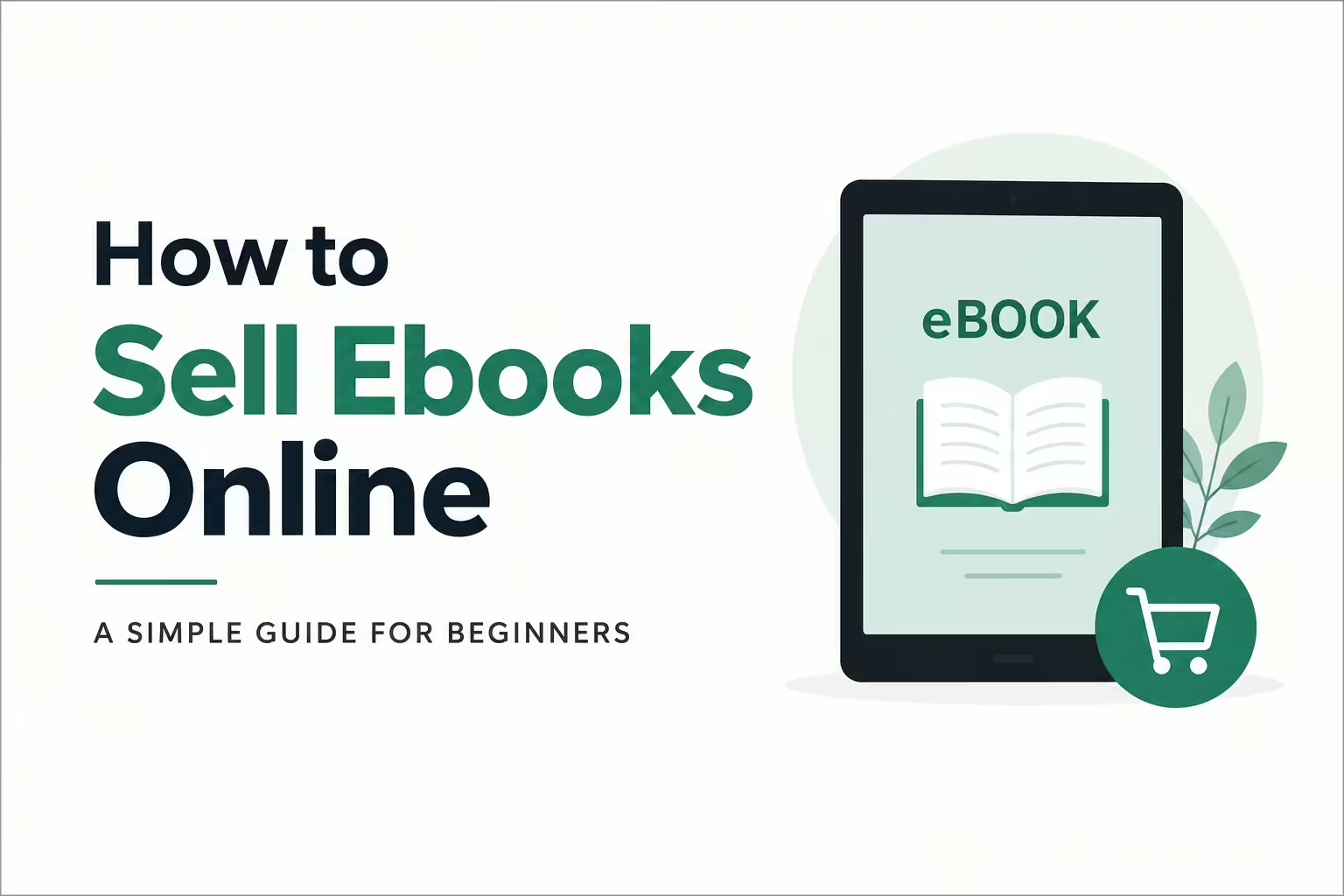
Introduction: Why Selling Ebooks Online Is One of the Best Side Hustles Right Now
If you want to make money online without shipping products or managing inventory, selling ebooks is one of the smartest moves you can make.
Ebooks are digital products. You create them once and sell them forever. No printing costs. No storage fees. No delivery headaches.
Whether you’re a student, a blogger, a freelancer, or someone looking for a reliable side income, learning how to sell ebooks online can change your financial situation — if you do it right.
In this guide, you’ll learn everything from picking your topic to getting your first sale. Let’s get started.
Find similar topics in Digital Products category.
What Is an Ebook and Why Should You Sell One?
An ebook is simply a digital book that people read on their phones, tablets, computers, or e-readers like Kindle.
You don’t need to be a professional author to write one. If you know something useful — how to cook, budget, get clients, pass an exam, lose weight, or grow on social media — you can package that knowledge into an ebook and sell it.
Here’s why ebooks are a great online business idea:
- Low startup cost (you can start for free)
- Passive income potential (sell while you sleep)
- No inventory or shipping required
- Easy to update and repurpose
- Works for almost any niche
Quick reality check: Selling ebooks is not a get-rich-quick scheme. It takes effort to write a good ebook, set it up properly, and market it. But once it’s running, it can generate income consistently.
Step 1: Choose a Profitable Ebook Topic
The biggest mistake beginners make is writing about something they love but nobody wants to buy.
Your ebook needs to solve a real problem or answer a burning question.
How to find a winning topic:
- Search Amazon Kindle Store — Look at bestseller lists in your niche. Check what topics get hundreds of reviews.
- Use Google Trends — See what people are searching for right now.
- Browse Reddit and Quora — Look for questions people keep asking in your area of expertise.
- Check Facebook Groups — What problems do people vent about repeatedly?
Profitable ebook niches to consider:
- Personal finance and budgeting
- Fitness and weight loss
- Career development and job interview tips
- Social media growth strategies
- Study guides and exam prep
- Relationship advice
- Digital marketing and freelancing
- Cooking and meal prep
Pro tip: Narrow your topic. Instead of “How to Lose Weight,” try “How to Lose 10 Pounds in 30 Days Without Going to the Gym.” Specific topics convert better and face less competition.
Step 2: Write and Format Your Ebook
You don’t need fancy writing software to create a great ebook. Most people use free tools like Google Docs or Microsoft Word.
What makes a good ebook:
- A clear structure with chapters or sections
- Short paragraphs that are easy to read
- Actionable advice, not just theory
- Real examples readers can relate to
- A strong introduction that hooks the reader
- A satisfying conclusion with a call to action
Typical ebook length:
- Short ebooks: 5,000–15,000 words (great for beginners)
- Standard ebooks: 15,000–30,000 words
- Comprehensive guides: 30,000+ words
You don’t need to write a 300-page book. A well-structured 50-page ebook that solves one problem can sell just as well as a long one.
Formatting tips for readability:
- Use headings and subheadings
- Add bullet points and numbered lists
- Include a table of contents
- Break up long sections with visuals or tips
- Use a clean, readable font like Georgia or Open Sans
Once your content is ready, export it as a PDF. PDF is the most widely accepted ebook format for self-publishing outside of Amazon.
If you plan to sell on Amazon Kindle, you’ll need to convert it to EPUB or MOBI format using a free tool like Calibre.
Step 3: Design a Professional Ebook Cover
People judge ebooks by their covers. A poor cover can kill your sales even if the content is excellent.
Free tools to design your ebook cover:
- Canva — The easiest option. It has ebook cover templates you can customize in minutes.
- Adobe Express — Another free tool with professional-looking designs.
- BookBrush — Made specifically for book covers.
What a good ebook cover includes:
- A clear, bold title
- Your author name
- A relevant image or graphic
- A color scheme that matches your niche (e.g., green for finance, blue for tech)
If design isn’t your strength, you can hire a freelancer on Fiverr or Upwork for as little as $10–$30 to design a professional cover for you.
Step 4: Set the Right Price for Your Ebook
Pricing is where many beginners struggle. Price too high and nobody buys. Price too low and people assume it’s low quality.
Common ebook pricing strategies:
- $0.99–$2.99 — Great for building an audience fast or for short ebooks
- $3.99–$9.99 — The sweet spot for most beginner ebooks
- $10–$29 — Works well for niche guides with high-value information
- $30–$97+ — Reserved for premium guides, workbooks, or ebooks bundled with other resources
Things that affect how much you should charge:
- The size and depth of the ebook
- Your existing audience and credibility
- The competition in your niche
- Whether you include bonuses like templates or checklists
Tip: Start with a mid-range price. You can always run a launch discount to build early sales and reviews.
Step 5: Choose Where to Sell Your Ebook Online
This is one of the most important decisions you’ll make. The platform you choose affects your reach, your profit margin, and how much control you have.
Option A: Sell on Your Own Website
Selling directly through your own website gives you the highest profit margin and full control over your customer list.
Best tools for selling ebooks on your own site:
- Gumroad — Simple setup. Free to start. Takes a small percentage per sale.
- Payhip — Another beginner-friendly option with a free plan.
- Lemon Squeezy — Great for digital products and handles tax automatically.
- WooCommerce — If you already have a WordPress site, this plugin works well.
- Shopify — Best if you plan to build a full digital product store.
Pros of selling on your own site:
- Keep 90–97% of revenue
- Build your own email list
- Full control over pricing and promotions
Cons:
- You must drive your own traffic
- Takes more setup effort
Option B: Sell on Amazon Kindle Direct Publishing (KDP)
Amazon KDP is the world’s largest ebook marketplace. Millions of readers search Amazon every day looking for books to buy.
Why Amazon KDP is great for beginners:
- Massive built-in audience
- Free to publish
- Earn 35%–70% royalties depending on price and format
- Your ebook appears in Amazon search results
Cons of Amazon KDP:
- Lower royalty percentage than selling direct
- You don’t own the customer relationship
- Exclusive programs like Kindle Unlimited limit where else you can sell
How to publish on Amazon KDP:
- Go to kdp.amazon.com
- Create a free account
- Upload your ebook file (EPUB or MOBI format)
- Upload your cover
- Set your price
- Publish
It typically takes 24–72 hours for your ebook to go live on Amazon.
Option C: Sell on Other Ebook Platforms
Don’t limit yourself to just one platform.
Other popular platforms to sell ebooks:
- Etsy — Surprisingly good for digital downloads, especially creative and educational ebooks
- Smashwords / Draft2Digital — Distributes your ebook to multiple retailers like Barnes & Noble, Kobo, and Apple Books
- Teachable or Podia — Better suited if you want to bundle your ebook with a course
- Gumroad — Works for selling to your social media audience directly
Step 6: Market Your Ebook and Drive Sales
Writing the ebook is only half the job. Marketing is where most beginners fall short.
You need to put your ebook in front of the right people — consistently.
Effective ways to market your ebook online:
Build an Audience Before You Launch
Start sharing free tips and value on social media, a blog, or YouTube before your ebook is ready. When you launch, you’ll already have people waiting to buy.
Use Email Marketing
Build an email list using a free tool like Mailchimp or ConvertKit. Offer a free resource (like a checklist or mini guide) in exchange for email sign-ups. Then promote your ebook to your list.
Leverage Social Media
- Share tips from your ebook as posts on Instagram, LinkedIn, or Twitter/X
- Create short videos on TikTok or YouTube Shorts explaining one concept from your ebook
- Pin your ebook link in your bio
Write SEO-Optimized Blog Posts
Create blog content around the same topic as your ebook. Optimize those posts for Google. Then link to your ebook naturally within the content.
For example, if your ebook is about freelancing, write blog posts like “How to Get Your First Freelance Client” and link to your ebook as the next step.
Run a Launch Discount
Offer a limited-time discount (e.g., 50% off for 72 hours) to create urgency and generate early reviews.
Ask for Reviews
Ask your early buyers to leave honest reviews on Amazon or your platform. Social proof builds trust and increases conversions.
Step 7: Scale Your Ebook Income Over Time
Once you make your first sale, you can start thinking about scaling.
Ways to grow your ebook income:
- Write more ebooks — Bundle them or create a series
- Upsell related products — Offer a course, template pack, or coaching alongside your ebook
- Create an affiliate program — Let others promote your ebook for a commission using tools like Gumroad or Payhip
- Repurpose your content — Turn your ebook into a course, podcast, or YouTube series
- Translate your ebook — Reach non-English speaking markets for additional revenue
Common Mistakes to Avoid When Selling Ebooks
Even smart people make these errors. Avoid them from the start.
- Skipping market research — Always validate demand before you write
- Writing a vague title — Your title should clearly state the benefit
- Ignoring SEO — Optimize your sales page and any blog posts you write about the ebook
- Giving up too early — Most ebooks take 3–6 months to build consistent sales
- Overpricing a first ebook — Build trust before charging premium prices
- No email list — Your email list is your most valuable marketing asset
Warning: Watch Out for These Ebook Scams
As with any money-making opportunity, there are scams targeting beginners.
Red flags to avoid:
- Courses promising you’ll make $10,000 in your first month selling ebooks
- Platforms that charge high upfront fees just to list your ebook
- Services that sell you “thousands of pre-written ebooks” to resell — these are often low quality and hurt your reputation
- Anyone asking you to pay to “get discovered” or “get on bestseller lists”
Stick with established, reputable platforms and build your business the right way.
Conclusion: Start Selling Ebooks Online Today
Learning how to sell ebooks online is one of the most practical and rewarding ways to earn money in the digital age.
The barrier to entry is low. The earning potential is real. And once your ebook is live, it can generate income 24/7 with minimal ongoing effort.
Here’s a quick recap of the steps:
- Pick a profitable topic that solves a real problem
- Write and format a high-quality ebook
- Design a professional cover
- Price it strategically
- Choose the right platform (or multiple platforms)
- Market consistently using content, social media, and email
- Scale by adding more products and building an audience
You don’t need to be a bestselling author. You just need to know something helpful and be willing to share it in a clear, useful way.
Start with what you know. Write your first ebook. Put it out there. Then improve from there.
Frequently Asked Questions (FAQs)
Q: How much money can you make selling ebooks online?
Income varies widely. Some beginners make $50–$200/month passively, while experienced sellers earn $1,000–$10,000+ per month. It depends on your niche, marketing effort, and how many ebooks you sell.
Q: Do I need a website to sell ebooks online?
No. You can sell ebooks through platforms like Amazon KDP, Gumroad, or Etsy without a website. However, having your own site gives you more control and higher profit margins over time.
Q: How long does it take to write an ebook?
A short ebook (5,000–10,000 words) can be written in a weekend if you stay focused. A more detailed guide might take 2–4 weeks of part-time work.
Q: Can I sell an ebook if I’m not a professional writer?
Absolutely. Most successful ebook authors are regular people sharing practical knowledge. Clear, helpful writing beats perfect grammar every time.
Q: What format should my ebook be in?
PDF works best for selling on your own site or platforms like Gumroad. Use EPUB or MOBI for Amazon Kindle.
Q: Is it free to sell ebooks online?
You can start for free using platforms like Amazon KDP or Gumroad’s free plan. Some platforms charge a small commission per sale instead of a monthly fee.
Q: How do I protect my ebook from being copied or pirated?
You can add password protection to PDFs, watermark pages, or use platforms that deliver ebooks securely. Some piracy is unavoidable, but most buyers are honest people.
Recommended posts:
- How to Start a Blog and Make Money in 2026: A Complete Beginner’s Guide
- Best Blog Monetization Methods for Beginners: How to Make Money Blogging in 2026
- How to Write Blog Posts That Rank on Search Engines (Complete Beginner’s Guide)
- How to Start Freelancing with No Experience (Complete Beginner’s Guide)