Introduction: Why Most Blogs Fail Without a Content Strategy
Most new bloggers make the same mistake. They write a few posts, wait for traffic, and get nothing.
The reason? They have no plan.
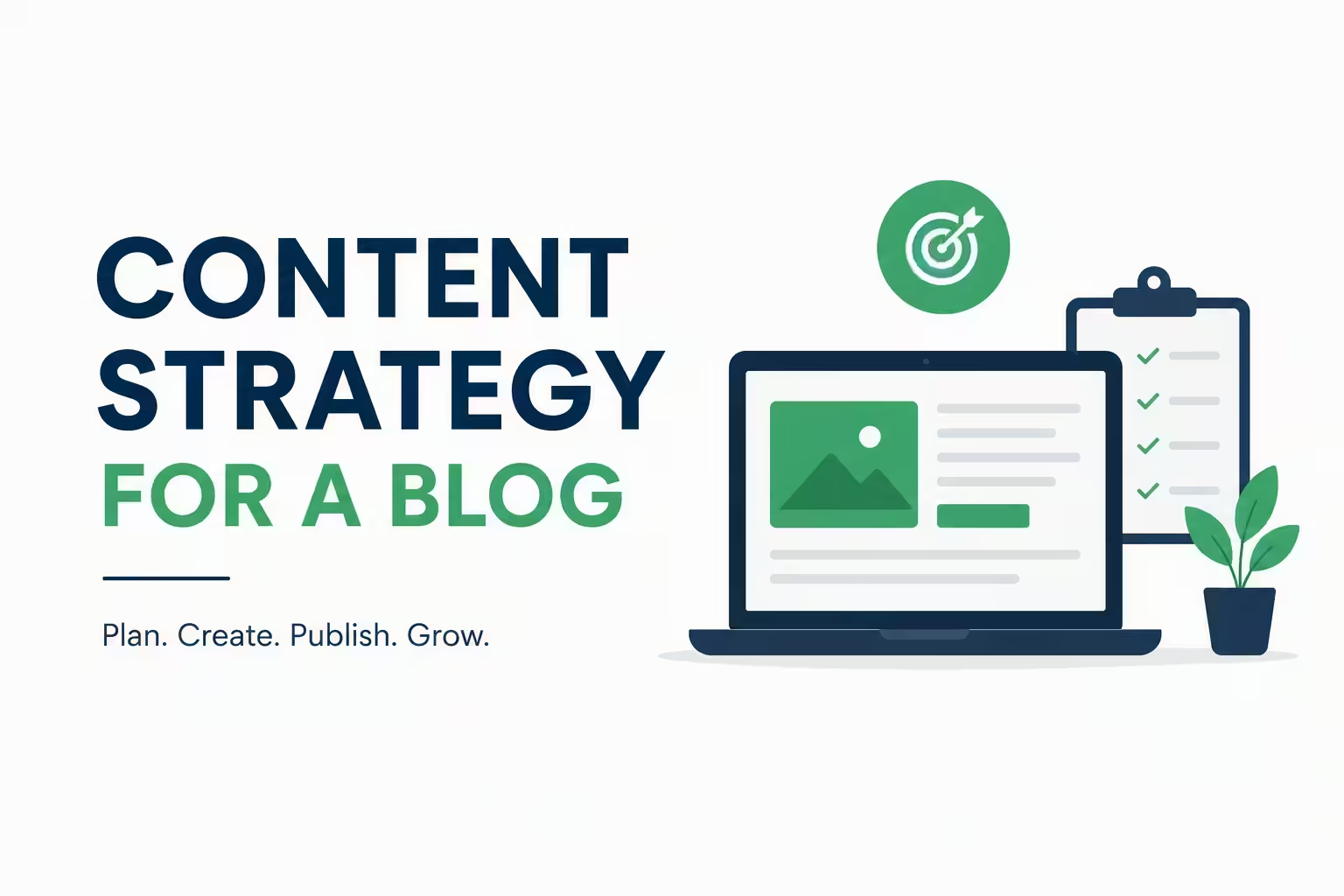
Learning how to create a content strategy for a blog is the single most important thing you can do before you publish your next post. A content strategy is your roadmap. It tells you what to write, who to write for, when to publish, and how to turn readers into income.
Whether you are a student, freelancer, side hustler, or someone trying to make money online, this guide will walk you through every step in plain, simple language.
No fluff. No jargon. Just a practical system you can start using today.
Find similar topics in Blogging category.
What Is a Blog Content Strategy? (And Why You Need One)
A blog content strategy is a documented plan that answers three core questions:
- Who are you writing for?
- What topics will you cover?
- How will your content help you reach your goals?
Think of it like a business plan for your blog. Without it, you are just publishing random posts and hoping for the best.
With a content strategy, you can:
- Attract the right readers consistently
- Rank on Google for targeted keywords
- Build authority in your niche
- Create a clear path to monetization
- Save hours of time every week
Without a content strategy, you will likely:
- Write posts nobody searches for
- Struggle to grow your audience
- Have no clear monetization path
- Burn out quickly from random content creation
The good news? Creating a content strategy is not complicated. You just need to follow the right steps.
Step 1: Define Your Blog Goals Before You Write Anything
Before you plan a single piece of content, ask yourself: What do I want this blog to do for me?
Your goal shapes everything. A blog built to make money through affiliate marketing needs a very different strategy than a blog built to land freelance clients.
Common blog goals include:
- Earning passive income through ads or affiliate marketing
- Building a personal brand or portfolio
- Driving traffic to a product or service
- Getting freelance writing or consulting clients
- Growing an email list for future product launches
- Ranking for keywords to sell digital products
Be specific. Instead of saying “I want to make money blogging,” say “I want to earn $1,000 per month from affiliate marketing within 12 months.”
Specific goals give you something to measure. They also help you choose topics, keywords, and content formats that directly support your outcome.
Step 2: Know Your Target Audience Inside and Out
Great content strategy starts with understanding your reader, not your topic.
Ask yourself:
- Who is my ideal reader?
- What problems are they trying to solve?
- What do they already know, and what confuses them?
- Where do they spend time online?
- What words do they use when searching for help?
Example: If your blog is about personal finance for college students, your reader is probably 18–24 years old, stressed about student loans, has little investing knowledge, and searches for things like “how to save money in college” or “best budgeting apps for students.”
Knowing this helps you write content that feels personal and useful, not generic.
A simple way to research your audience:
- Read comments on blogs in your niche
- Browse Reddit communities (subreddits) related to your topic
- Check YouTube comments on popular videos in your space
- Look at questions in Quora related to your niche
- Use Answer the Public or Google’s “People Also Ask” section
The more you understand your reader, the easier it becomes to create content they actually want to read.
Step 3: Choose Your Niche and Content Pillars
A niche is the specific topic area your blog focuses on. Content pillars are the 3–5 main subtopics that live under your niche.
Example Niche: Freelance Writing Content Pillars:
- How to find freelance writing clients
- Writing tips for beginners
- Tools and resources for freelancers
- How to price your services
- How to build a freelance portfolio
Having content pillars keeps your blog focused. It also helps Google understand what your site is about, which improves your overall SEO authority.
Tips for choosing a niche:
- Pick something you understand or are willing to learn deeply
- Make sure people are actively searching for content in that niche
- Check that there are monetization opportunities (products, services, affiliate programs)
- Avoid niches that are either too broad (health) or too narrow (left-handed guitar players over 60)
Step 4: Conduct Keyword Research for Your Blog
Keyword research is the backbone of any strong blog content strategy. It tells you exactly what your audience is typing into Google so you can create content that shows up in search results.
Here is a simple keyword research process:
1. Start with seed keywords. These are broad terms related to your niche. For a personal finance blog, seed keywords might be “save money,” “invest for beginners,” or “budgeting tips.”
2. Use free keyword tools.
- Google Search (type a keyword and look at autocomplete suggestions)
- Google’s “People Also Ask” and “Related Searches” sections
- Ubersuggest (free plan available)
- KeywordTool.io
- Ahrefs Free Keyword Generator
3. Look for long-tail keywords. Long-tail keywords are longer, more specific phrases like “how to save money on groceries as a student” instead of just “save money.” They are easier to rank for and attract highly targeted readers.
4. Check keyword difficulty. If you are a new blog, avoid highly competitive keywords. Target low-difficulty keywords (score under 30 on most tools) first to build traffic and authority.
5. Understand search intent. Ask yourself: Is the person searching for information, a comparison, a how-to guide, or a product to buy? Match your content format to the intent.
Pro Tip: One strong keyword per blog post. Do not try to target five keywords in one article. It confuses Google and dilutes your content.
Step 5: Plan Your Content Mix and Formats
Not all blog posts serve the same purpose. A smart content strategy includes a mix of different content types.
The main content types for blogs:
| Content Type | Purpose | Example |
|---|---|---|
| How-to guides | Teach a skill | “How to Start a Blog in 2025” |
| Listicles | Quick, scannable value | “10 Best Tools for Bloggers” |
| Case studies | Build trust and credibility | “How I Grew My Blog to 10K Visitors” |
| Comparison posts | Help readers choose | “Bluehost vs. SiteGround: Which Is Better?” |
| Reviews | Drive affiliate income | “ConvertKit Review: Is It Worth It?” |
| Ultimate guides | Build authority | “The Complete Guide to SEO for Beginners” |
| FAQ posts | Target long-tail keywords | “Frequently Asked Questions About Freelancing” |
A good rule of thumb for beginners:
- 50% educational how-to posts (builds traffic)
- 30% comparison and review posts (drives income)
- 20% personal or case study posts (builds trust)
Step 6: Build a Content Calendar
A content calendar is simply a schedule that tells you what to publish and when.
Consistency matters more than frequency. Publishing one great post per week beats publishing three rushed posts and then going silent for a month.
How to build a simple content calendar:
- Open a Google Sheet or use a free tool like Trello or Notion
- Plan 30–90 days of content in advance
- For each post, include: title, target keyword, content type, publish date, and status
- Start with your easiest, highest-traffic potential topics first
- Leave room for trending or seasonal content
Example content calendar row:
- Title: How to Write a Blog Post Fast
- Keyword: how to write a blog post
- Type: How-to guide
- Date: June 15
- Status: In progress
A content calendar removes the daily question of “what should I write today?” and keeps you moving forward consistently.
Step 7: Optimize Every Post for SEO
Creating content without SEO optimization is like building a store with no sign on the door. Nobody knows you exist.
On-page SEO checklist for every blog post:
- Include your primary keyword in the title, first paragraph, one H2 heading, and conclusion
- Write a compelling meta description (150–160 characters) with your keyword
- Use short paragraphs (2–4 lines)
- Add subheadings (H2, H3) every 200–300 words
- Include internal links to 2–3 other posts on your blog
- Add external links to credible sources
- Optimize your images with descriptive alt text
- Use your keyword naturally 3–5 times throughout a 1,500-word post
- Write a URL slug that includes your main keyword
For featured snippet optimization:
- Answer questions directly and concisely (40–60 words) right below a question-style H2
- Use numbered lists or bullet points for step-by-step content
- Include a summary paragraph near the top of your post
Common SEO mistake to avoid: Do not keyword-stuff. Using your keyword 20 times in a 500-word post will hurt your rankings, not help them.
Step 8: Plan Your Internal Linking Structure
Internal linking is one of the most underrated parts of a content strategy. It keeps readers on your site longer, helps Google crawl your content, and boosts your overall SEO.
How to do internal linking well:
- Every new post should link to at least 2–3 older related posts
- Older posts should be updated to link to newer ones
- Use descriptive anchor text (the clickable words) instead of “click here”
- Create pillar pages (comprehensive guides) that link to multiple related posts
Example: A pillar page about “Freelance Writing” might link to individual posts about finding clients, setting rates, and writing pitches. Each of those posts links back to the pillar page.
This creates a content cluster that signals to Google you have deep expertise on a topic.
Step 9: Plan Your Monetization Strategy From Day One
Many beginners think monetization comes after traffic. In reality, you should plan how your blog will earn money before you write your first post. Your monetization method determines which content you create.
Popular blog monetization methods:
- Display Ads (Google AdSense, Mediavine): You need significant traffic (25,000+ monthly sessions for Mediavine). Good for informational blogs.
- Affiliate Marketing: Earn commissions by recommending products. Works well for review and comparison posts. Platforms include Amazon Associates, ShareASale, and Impact.
- Sponsored Posts: Brands pay you to write about their products. Requires an established audience.
- Digital Products: Sell ebooks, templates, or courses. High profit margins.
- Freelance Services: Use your blog as a portfolio to attract clients.
- Email List Monetization: Build a list from day one and sell to subscribers over time.
Warning: Avoid anyone promising you will earn $10,000 in your first month of blogging. Growing a profitable blog takes 6–18 months of consistent work. Anyone selling instant results is likely running a scam.
Step 10: Track, Measure, and Improve
A content strategy is not a set-it-and-forget-it document. You need to review it regularly and adjust based on real data.
Key metrics to track:
- Organic traffic: Are people finding your blog through Google?
- Bounce rate: Are readers staying on your site or leaving immediately?
- Time on page: Are people actually reading your content?
- Top-performing posts: Which posts drive the most traffic and income?
- Keyword rankings: Are your posts moving up in Google?
Free tools to track performance:
- Google Analytics (tracks all traffic and behavior)
- Google Search Console (shows which keywords you rank for)
- Ubersuggest (tracks keyword positions)
Review your strategy every 30–60 days. Double down on what is working and revise or eliminate what is not.
Conclusion: Start Building Your Blog Content Strategy Today
Now you know exactly how to create a content strategy for a blog. You have a complete system: setting goals, defining your audience, researching keywords, planning content, optimizing for SEO, and mapping your path to monetization.
The biggest mistake you can make right now is doing nothing with this information.
Start small. Define your goals today. Pick your top three content pillars. Research five keywords. Build a 30-day content calendar. Publish your first optimized post this week.
Every successful blogger you look up to started exactly where you are right now. The difference is they took action and stayed consistent.
Your strategy does not need to be perfect. It just needs to exist. Start today, adjust as you go, and you will be ahead of 90% of bloggers who are still just winging it.
Frequently Asked Questions (FAQs)
Q1: How long does it take to create a blog content strategy?
You can create a basic content strategy in one focused afternoon. Spend 30 minutes on goals and audience research, 30 minutes on keyword research, and 30 minutes building a simple content calendar. Refine it as you learn more about your audience.
Q2: How many blog posts should I publish per week as a beginner?
One well-researched, SEO-optimized post per week is a strong starting point. Quality always beats quantity. A single comprehensive 2,000-word post will outperform five rushed 300-word posts every time.
Q3: Do I need to know SEO to create a content strategy?
You do not need to be an SEO expert. Learning the basics (keyword research, on-page optimization, internal linking) is enough to get started. Free tools like Google Search Console and Ubersuggest make it easy for beginners.
Q4: Can I create a content strategy for a free blog?
Yes. The strategy process works the same whether you are on WordPress.com, Blogger, or a self-hosted site. That said, a self-hosted WordPress blog gives you far more control over SEO and monetization in the long run.
Q5: How do I know if my content strategy is working?
Track your organic traffic in Google Analytics and your keyword rankings in Google Search Console. If both are trending upward after 3–6 months of consistent publishing, your strategy is working. If not, review your keyword targeting and content quality.
Q6: What is the biggest mistake beginners make with their content strategy?
Writing for themselves instead of their audience. Every piece of content should solve a specific problem your reader is searching for. If nobody is searching for your topic, nobody will find your post.