Introduction: Yes, Students Can Really Earn Money Online
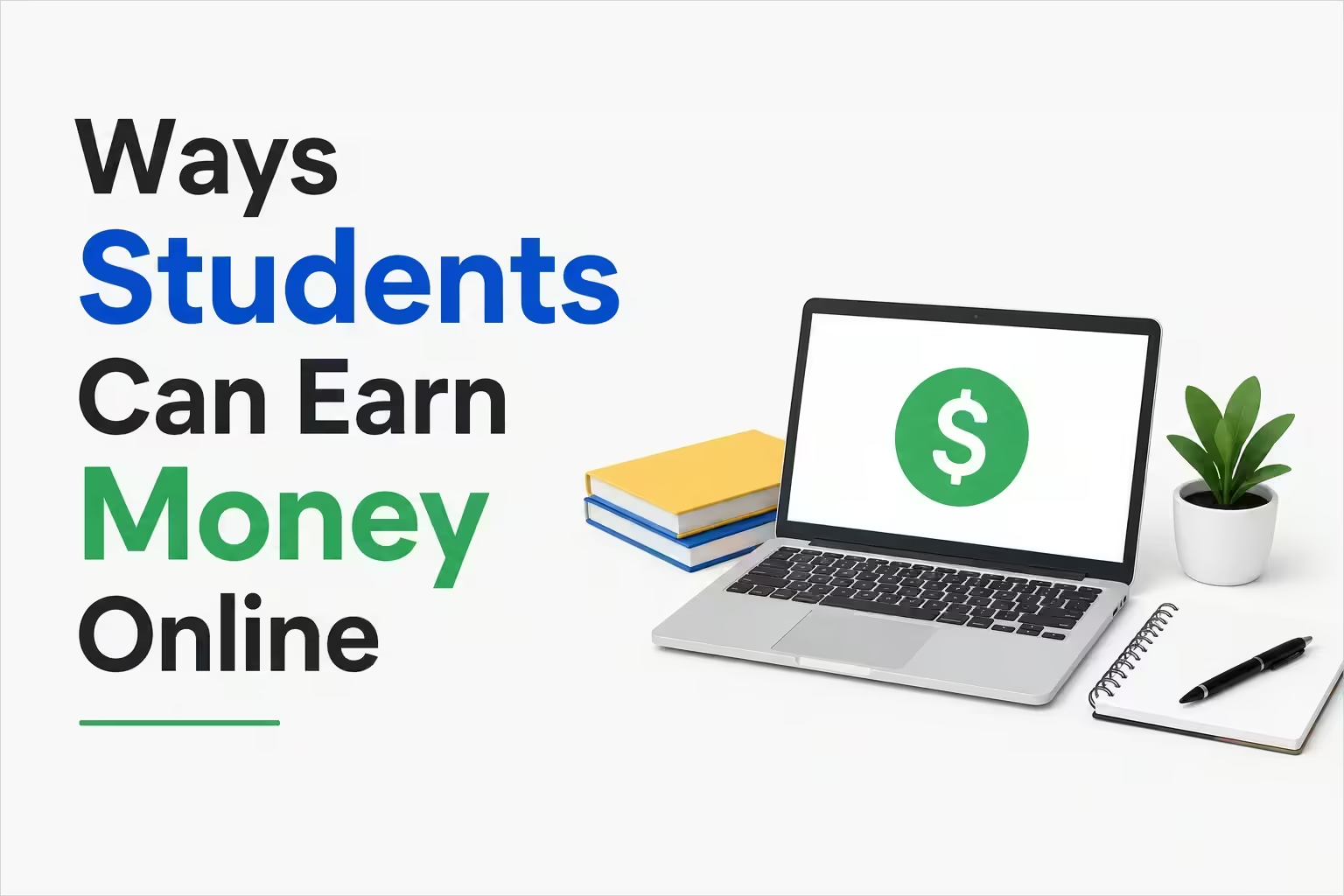
If you are a student wondering how to pay for tuition, cover daily expenses, or simply build some savings, you are not alone. Thousands of students around the world are already earning money online — without skipping classes or burning out.
The good news? You do not need prior experience, a degree, or a big investment to get started. All you need is a smartphone or laptop, an internet connection, and the willingness to learn.
In this guide, you will discover the most practical and proven ways students can earn money online. Each method is beginner-friendly, flexible, and can fit around your college schedule.
Let’s dive in.
Find similar topics in Freelancing & Online Work category.
Why Earning Money Online Is Perfect for Students
Before jumping into the methods, it helps to understand why online income works so well for students specifically.
- Flexible hours: You work when you want — morning, night, or between classes.
- Low startup cost: Most methods require zero investment to begin.
- Skill-building: Many methods help you build resume-worthy skills.
- Scalable income: Start small and grow over time.
- Location-free: Work from your dorm, home, or a café.
Unlike a part-time job with fixed shifts, online income can bend around your lifestyle.
1. Freelance Writing: Get Paid to Write Content
If you can write clearly, freelance writing is one of the fastest ways students can earn money online.
Businesses, blogs, and websites constantly need content. They pay writers to create blog posts, product descriptions, social media captions, newsletters, and more.
How to get started:
- Sign up on platforms like Fiverr, Upwork, or PeoplePerHour.
- Create a simple profile highlighting your writing skills.
- Offer to write sample articles on topics you know well.
- Start with lower rates to build reviews, then raise your prices.
Realistic earnings: Beginners typically earn $10–$30 per article. Experienced writers can charge $100 or more per piece.
Pro tip: Pick a niche you already study — finance, health, technology, or education. Niche writers earn more than generalists.
Warning: Avoid clients who ask for a “test article” with no pay. Legitimate clients pay for all work, even samples.
2. Selling Digital Products: Earn While You Sleep
Digital products are files or downloads that you create once and sell repeatedly. This is one of the best passive income ideas for students because there is no inventory and no shipping.
Popular digital products students can sell:
- Study notes and summaries
- Resume or CV templates
- Printable planners and calendars
- E-books or short guides
- Canva templates for social media
- Notion templates for productivity
Where to sell them:
- Etsy — great for printables and templates
- Gumroad — easy to set up, no upfront cost
- Payhip — beginner-friendly platform for digital downloads
- Teachers Pay Teachers — ideal for educational content
Example: A university student who creates detailed chemistry notes can package them as a PDF and sell them to students globally for $5–$15 each.
Pros: Passive income, low effort after creation, scalable. Cons: Takes time to build traffic and sales initially.
3. Freelance Graphic Design: Turn Creativity Into Cash
Graphic design is a high-demand skill, and you do not need a design degree to offer basic services. If you can use tools like Canva, Adobe Express, or Figma, you already have a starting point.
Services beginners can offer:
- Social media post design
- Logo creation
- YouTube thumbnails
- Business card design
- Presentation slide design
Where to find clients:
- Fiverr (great for beginners with no clients yet)
- Upwork
- Instagram or LinkedIn (showcase your work and attract clients)
- Facebook groups for small businesses
Realistic earnings: $15–$50 per basic design project. Logo designers with portfolios can charge $100–$500+.
Free tools to start: Canva Pro (free for students via many college programs), Adobe Express.
4. Tutoring Online: Teach What You Know
One of the most underrated ways students can earn money online is by teaching others. If you are strong in any subject — math, science, languages, history, coding — someone out there wants to learn it from you.
Online tutoring platforms for students:
- Chegg Tutors — pay per minute of tutoring
- Preply — great for language tutors
- Tutor.com — reliable platform with steady clients
- Wyzant — good for academic subjects
- Superprof — popular globally
You can also offer tutoring directly via Zoom or Google Meet and charge your own rates.
Realistic earnings: $10–$40 per hour depending on the subject and platform.
Example: A second-year engineering student tutoring high school students in math can easily earn $200–$500 per month with just a few hours per week.
5. Taking Surveys and Micro-Tasks: Easy but Limited
Online surveys and micro-tasks are not going to make you rich, but they are a simple way to earn some extra cash in your free time.
Legit platforms for paid surveys and tasks:
- Swagbucks — earn points for surveys, videos, and shopping
- Survey Junkie — straightforward survey site
- Amazon Mechanical Turk — small data tasks
- Appen — AI training tasks, data labeling
- Remotasks — flexible micro-tasks
Realistic earnings: $1–$5 per hour on average.
Pros: No skills required, instant to start. Cons: Very low pay, time-consuming, limited earning ceiling.
Recommendation: Use this only as a starting point while building higher-paying skills.
6. YouTube or Short-Form Video Content: Build and Monetize
Creating video content is a long-term strategy, but students have a built-in advantage — authenticity. Content about student life, budgeting, study tips, or college experiences performs extremely well.
How students can earn from video content:
- YouTube AdSense — earn from ads once you hit 1,000 subscribers and 4,000 watch hours
- Sponsorships — brands pay creators to promote their products
- Affiliate links — earn a commission when viewers buy products you recommend
- Channel memberships — fans pay monthly for exclusive content
Short-form alternatives:
- TikTok Creator Fund
- Instagram Reels bonuses (varies by region)
Example content ideas for students:
- “Day in the life of a medical student”
- “How I study for finals”
- “Budget meal prep for college students”
Warning: Building an audience takes months. Do not quit too early. Consistency beats perfection.
7. Affiliate Marketing: Earn Commissions Without a Product
Affiliate marketing means promoting someone else’s product and earning a commission whenever someone buys through your link.
You do not need to create anything or handle customer service. You simply share a special link and earn when people click and buy.
How students can do affiliate marketing:
- Start a blog or niche website
- Share affiliate links on YouTube, social media, or in newsletters
- Write product review articles targeting buying-intent keywords
Best affiliate programs for beginners:
- Amazon Associates — promote almost anything on Amazon
- ShareASale — wide range of products and niches
- ClickBank — digital products with high commissions
- Hostinger or Bluehost affiliate programs — great if you blog about online business
Realistic earnings: Completely variable. Beginners might earn $50–$200/month. Top affiliates earn thousands monthly.
Pro tip: Focus on a niche you care about — finance, fitness, technology, beauty. Authentic recommendations convert much better.
8. Selling Handmade or Thrifted Items Online
If you enjoy thrifting, crafting, or making things by hand, you can sell them online and turn a hobby into income.
What you can sell:
- Thrifted clothing and accessories (flip for profit)
- Handmade jewelry or accessories
- Custom art or illustrations
- Candles, soaps, or DIY home goods
Best platforms to sell:
- Etsy — best for handmade and vintage items
- eBay — great for thrifted or collectible items
- Depop — popular for fashion and streetwear
- Facebook Marketplace — good for local selling with no fees
Example: A student who buys secondhand branded clothes for $5 and resells them for $30–$50 can generate solid part-time income with minimal effort.
9. Transcription and Data Entry: Simple Online Work
Transcription involves listening to audio files and typing out what is said. Data entry involves organizing information into spreadsheets or databases.
These are entry-level online jobs that require no special training, just accuracy and attention to detail.
Platforms to find transcription and data entry work:
- Rev.com — audio and video transcription
- TranscribeMe — short audio clips, flexible hours
- GoTranscript — beginner-friendly
- Upwork and Fiverr — for data entry projects
Realistic earnings: $10–$20 per audio hour for transcription. Data entry varies widely.
Who this suits: Students who want steady, low-pressure work they can do anytime.
10. Social Media Management: Help Businesses Grow
Most small businesses know they need to be on social media — but they do not have the time to manage it. That is where students come in.
If you understand how Instagram, Facebook, TikTok, or LinkedIn work, you can manage accounts for local businesses or online brands.
What social media managers do:
- Create and schedule posts
- Write captions and hashtags
- Respond to comments and messages
- Track basic analytics and growth
How to get your first client:
- Approach local businesses in your area
- Offer a one-month trial at a reduced rate
- Showcase any personal accounts as examples of your skills
Realistic earnings: $150–$500 per month per client as a beginner. Experienced managers charge $1,000+ per month per client.
Frequently Asked Questions (FAQs)
Q1: Can students earn money online without any experience?
Yes, absolutely. Many methods like surveys, transcription, selling digital products, or tutoring require little to no prior experience. The key is starting with what you already know and building from there.
Q2: How much money can a student realistically earn online per month?
It depends on the method and time invested. Beginners can realistically earn $100–$500 per month. Students who commit consistently to freelancing or content creation can earn $1,000–$3,000+ per month over time.
Q3: What is the fastest way for a student to start earning online?
Freelancing on Fiverr or Upwork, selling study notes on Gumroad, or tutoring on Preply are among the fastest ways to start. You can set up a profile and get your first client within a week.
Q4: Are online money-making opportunities for students legitimate?
Most methods in this guide are 100% legitimate. However, always watch out for opportunities that ask you to pay money upfront, promise unrealistic earnings, or ask for personal banking details before work starts. Stick to established platforms.
Q5: How many hours per week should a student dedicate to earning online?
Start with just 5–10 hours per week. This is enough to learn the skill, get your first clients, and earn your first income without affecting your studies.
Q6: Do students need to pay taxes on online income?
This depends on your country and income level. In most countries, income above a certain threshold is taxable regardless of how you earn it. Consult a local tax advisor or your country’s tax authority guidelines.
Common Scams Students Should Avoid
Unfortunately, not every online opportunity is genuine. Here are red flags to watch out for:
- “Pay to get started” schemes — legitimate platforms never ask for upfront fees.
- Unrealistic promises — “Earn $500 a day with no effort” is almost always a scam.
- Unpaid test work — if a client asks for free work before hiring, walk away.
- Requests for personal banking info — share payment details only through secure, verified platforms.
- Multi-level marketing disguised as online business — be cautious of any “business opportunity” that requires you to recruit others to earn.
Stick to established platforms and trust your instincts.
Final Thoughts: Start Small, Stay Consistent
There are so many ways students can earn money online — and the best method is simply the one you start with today.
You do not need to master everything at once. Pick one or two methods from this list that match your current skills, commit to learning them, and build from there.
The students who succeed online are not the most talented ones. They are the ones who show up consistently, keep improving, and do not give up after the first slow week.
Start today. Even one small step puts you ahead of everyone still waiting for the “perfect moment.”
Recommended posts:
- Remote Jobs for Beginners: The Complete Guide to Getting Started in 2026
- How Long Does It Take to Make Money Blogging? (Honest Answer)
- Best Niches for Starting a Blog in 2026: The Complete Beginner’s Guide
- How to Promote Affiliate Links Without Spamming (The Right Way)
- Side Hustles Without Investment: 20 Real Ways to Earn Money Online in 2026