Introduction: Why Your Website Isn’t Ranking (And What Off-Page SEO Has to Do With It)
You’ve written a great blog post. You’ve added keywords, optimized your images, and made sure your page loads fast. But weeks later, it’s still buried on page 5 of Google. Sound familiar?
Here’s the truth: on-page SEO alone isn’t enough. Google doesn’t just look at what’s on your website. It also looks at what the rest of the internet thinks about your website. That’s exactly what off-page SEO is all about.
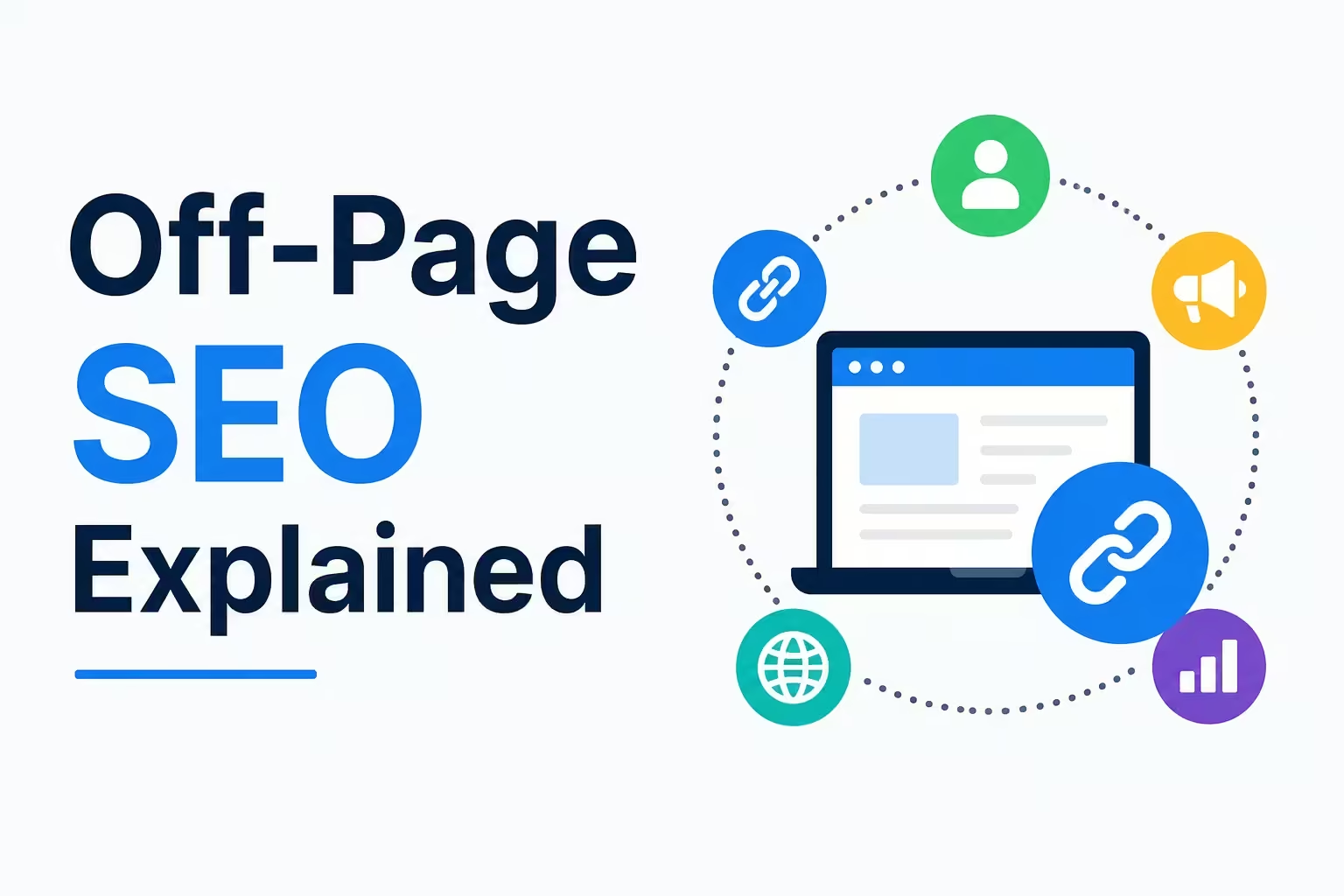
Off-page SEO explained simply means everything you do outside your website to improve your rankings on search engines. Think of it as your online reputation. The more trusted and authoritative websites that link to you or mention you, the more Google trusts you — and the higher you rank.
In this guide, you’ll learn exactly what off-page SEO is, why it matters, and most importantly, how to start doing it yourself — even if you’re a complete beginner with zero budget.
Let’s dive in.
Find similar posts in SEO category.
What Is Off-Page SEO? (Simple Definition)
Off-page SEO refers to all the actions you take outside of your own website to influence your search engine rankings.
While on-page SEO focuses on your content, headings, and keyword placement, off-page SEO focuses on:
- Who is talking about your website
- Who is linking back to your content
- How popular and trusted your brand is across the internet
Think of it this way. Imagine two restaurants. Both have great menus and clean interiors. But one has hundreds of five-star reviews, food bloggers raving about it, and celebrities recommending it on social media. Which one do you trust more?
Google thinks the same way. Off-page signals tell Google that your website is worth recommending.
Why Off-Page SEO Matters for Rankings
Google uses over 200 ranking factors. Off-page signals — especially backlinks — are among the most powerful ones.
Here’s why off-page SEO matters so much:
- It builds authority. Websites with strong off-page profiles consistently outrank newer or weaker sites, even with similar content.
- It drives referral traffic. When other websites link to you, their readers can click through to your site — free traffic without relying on Google.
- It builds brand trust. Being mentioned on reputable platforms makes visitors trust your website more.
- It accelerates rankings. Combining solid on-page SEO with a strong off-page strategy helps you rank faster.
According to multiple SEO studies, backlinks remain one of the top three ranking factors Google uses. Ignoring off-page SEO means leaving rankings — and money — on the table.
The Core Components of Off-Page SEO Explained
Let’s break down the main pillars of off-page SEO so you know exactly where to focus your energy.
1. Backlinks: The Foundation of Off-Page SEO
A backlink is simply a link from another website that points to your site. It’s like a vote of confidence. The more high-quality votes you have, the more Google trusts your site.
But not all backlinks are equal. Here’s what matters:
- Authority of the linking site: A backlink from Forbes or BBC is worth far more than a link from a random unknown blog.
- Relevance: A link from a cooking blog to your recipe website is more valuable than a link from an unrelated tech site.
- Anchor text: The clickable text of the link should be natural and relevant.
- Dofollow vs. Nofollow: Dofollow links pass SEO value. Nofollow links don’t directly, but they still add diversity to your profile.
Example: If a popular personal finance website links to your article about budgeting tips, Google sees that as a strong endorsement.
2. Link Building Strategies That Actually Work
Now you know what backlinks are. Here’s how to actually get them:
Guest Posting
Write articles for other websites in your niche. In return, you usually get a backlink in your author bio or within the content. This is one of the most effective strategies for beginners.
- Find blogs that accept guest posts by searching: “your niche” + “write for us”
- Pitch a unique, valuable article idea
- Always link back to a relevant page on your site
Broken Link Building
Find broken links on other websites and offer your content as a replacement.
- Use free tools like Ahrefs’ free backlink checker or Check My Links Chrome extension
- Email the website owner politely, point out the broken link, and suggest your content as a fix
- This works because you’re genuinely helping them while earning a link
Resource Page Link Building
Many websites have “resources” or “useful links” pages. If your content is high quality, you can ask to be added.
- Search: “your niche” + “useful resources”
- Email the site owner explaining how your content adds value
HARO (Help a Reporter Out)
Journalists and bloggers post questions daily looking for expert quotes. You answer their questions and often get a backlink from high-authority media sites.
- Sign up free at helpareporter.com (now called Connectively)
- Respond quickly with clear, expert-sounding answers
- You can get backlinks from sites like HuffPost, Forbes, and Business Insider
Create Linkable Assets
These are pieces of content so good that people naturally link to them:
- Original research or surveys
- Comprehensive guides
- Infographics
- Free tools or templates
3. Social Media Signals
Social media doesn’t directly boost your Google rankings. But it plays an indirect role in off-page SEO.
When you share content on social media and people engage with it, you increase the chances of:
- Bloggers and journalists finding and linking to your content
- Getting more traffic, which sends positive signals to Google
- Building brand awareness that leads to branded searches
Best platforms for SEO-related social signals:
- LinkedIn (especially for B2B and professional content)
- Pinterest (excellent for driving traffic, especially for lifestyle and recipe blogs)
- Twitter/X (great for connecting with journalists and bloggers for HARO-style opportunities)
- Facebook Groups (share your content in relevant communities)
Pro tip: Share your content multiple times across different social platforms with different captions. Don’t just post once and forget it.
4. Brand Mentions
A brand mention is when someone talks about your website or business online — even without linking to you.
Google’s algorithm is smart enough to recognize these “implied links” as a trust signal. The more people mention your brand, the more authority you build.
How to get brand mentions:
- Get featured in podcasts as a guest
- Contribute quotes to industry roundup posts
- Build a strong social media presence
- Collaborate with other bloggers or creators in your niche
How to track brand mentions:
- Use Google Alerts (free) — set up alerts for your website name or brand
- Use tools like Mention.com or Brand24 for more detailed tracking
5. Local SEO and Off-Page Signals
If you run a local business or want to rank for local searches, off-page SEO works slightly differently.
Key local off-page signals include:
- Google Business Profile: Claiming and optimizing your listing is essential
- Local citations: Mentions of your business name, address, and phone number (NAP) on directories like Yelp, TripAdvisor, and Yellow Pages
- Local backlinks: Links from local news sites, chambers of commerce, or community blogs
- Customer reviews: Reviews on Google, Yelp, and Facebook are powerful off-page trust signals
Example: A freelance photographer in Delhi would benefit from being listed on local directories, getting featured in a local wedding blog, and earning five-star reviews on Google.
6. Forum Participation and Community Engagement
Engaging in online communities can build your authority and drive traffic.
- Reddit: Share helpful advice in relevant subreddits. Don’t spam links — add real value first, then occasionally reference your content.
- Quora: Answer questions in your niche and link to your relevant articles naturally.
- Niche Forums: Join industry-specific forums and participate genuinely.
- Facebook Groups and LinkedIn Groups: Build relationships with peers and potential readers.
The key here is to give first, promote second. Spamming links gets you banned and hurts your reputation.
Off-Page SEO: Dos and Don’ts
Do This:
- Focus on earning links from relevant, high-authority websites
- Build relationships with bloggers, journalists, and creators in your niche
- Create content so valuable that people want to share and link to it
- Be patient — off-page SEO results take time, usually 3 to 12 months
- Diversify your backlink profile (mix of do-follow, no-follow, different domains)
Avoid This:
- Buying backlinks (Google can penalize your site for this)
- Participating in link farms or private blog networks (PBNs)
- Getting links from irrelevant or spammy websites
- Over-optimizing anchor text (using the exact keyword every time looks unnatural)
- Ignoring your brand’s online reputation
Warning: There are many services that sell “1,000 backlinks for $5.” These are almost always low-quality, spammy links that will hurt your rankings rather than help them. Avoid them completely.
How Long Does Off-Page SEO Take to Show Results?
This is one of the most common beginner questions — and the honest answer is: it depends.
Generally speaking:
- New websites: 6 to 12 months to start seeing significant results
- Established websites with some authority: 1 to 4 months for new link-building efforts to show impact
- High-competition niches: May take longer regardless of how many links you build
Off-page SEO is a long game. But the results compound over time. A strong backlink you earn today could keep sending traffic and authority signals to your site for years.
Off-Page SEO Tools for Beginners (Free and Paid)
You don’t need to spend a fortune to get started. Here are tools worth knowing:
Free Tools:
- Google Search Console — Monitor your backlink profile for free
- Google Alerts — Track brand mentions
- Ahrefs Free Backlink Checker — Check backlinks for any website
- Ubersuggest (free plan) — Basic backlink and SEO data
- HARO/Connectively — Earn backlinks from journalists
Paid Tools (Worth It as You Grow):
- Ahrefs — Industry-leading backlink analysis
- SEMrush — All-in-one SEO and backlink tool
- Moz Pro — Great for domain authority tracking
- BuzzSumo — Find top-performing content and who’s sharing it
Start with the free tools. Invest in paid tools only when your website is generating income.
Off-Page SEO for Monetization: How It Makes You Money
If you’re a blogger, freelancer, or online entrepreneur, off-page SEO isn’t just about rankings. It directly impacts your income.
Here’s how:
- Higher rankings = more organic traffic = more ad revenue (Google AdSense, Mediavine, etc.)
- More authority = better affiliate commissions (brands prefer to work with trusted sites)
- Strong backlink profile = easier to rank new content meaning less effort for the same results over time
- Brand mentions = free PR that can lead to sponsorships, partnerships, and consulting opportunities
- Guest posts on big sites can bring in new clients, readers, and customers directly
For freelancers and job seekers: having a blog or personal website with strong off-page SEO makes you stand out. It proves you know what you’re doing — better than any certificate.
Quick-Start Off-Page SEO Checklist for Beginners
Here’s what to do right now if you’re just getting started:
- Set up Google Alerts for your brand name
- Claim your Google Business Profile if you have a local business
- Create profiles on 3 to 5 relevant social media platforms
- Sign up for HARO and respond to at least 5 queries this week
- Write your first guest post pitch and send it to 3 relevant blogs
- List your website on 5 to 10 reputable directories in your niche
- Join 2 to 3 active online communities in your niche and start contributing
- Create one high-quality linkable asset (a comprehensive guide, infographic, or free template)
Do all of this consistently over 3 months, and you’ll start seeing results.
Conclusion: Off-Page SEO Is Your Secret Weapon
If you want your website to rank higher, get more traffic, and ultimately make more money online, off-page SEO is not optional — it’s essential.
To recap what we covered in this off-page SEO explained guide:
- Off-page SEO is everything you do outside your website to build trust and authority
- Backlinks are the most powerful off-page signal
- Social media, brand mentions, and community engagement all play a role
- Avoid black-hat tactics like buying links — they can destroy your site
- Be consistent and patient — results come, but they take time
Start small. Pick two or three strategies from this guide and implement them this week. The bloggers and entrepreneurs who outrank everyone else aren’t necessarily smarter — they’re just more consistent with their off-page SEO efforts.
Now it’s your turn.
Frequently Asked Questions (FAQs)
What is off-page SEO in simple terms?
Off-page SEO is everything you do outside your website to improve your Google rankings. It mainly includes getting backlinks, social media activity, and brand mentions from other websites.
What is the difference between on-page and off-page SEO?
On-page SEO involves optimizing the content and structure of your website. Off-page SEO focuses on building your website’s reputation and authority through external signals like backlinks and mentions.
Is off-page SEO still important in 2025?
Absolutely. Backlinks and brand authority remain among Google’s top ranking factors. Off-page SEO is just as important today as it’s ever been — possibly more so as competition increases.
How do I get backlinks for free?
You can earn free backlinks through guest posting, HARO, broken link building, forum participation, creating shareable content, and getting featured on resource pages.
How many backlinks do I need to rank on Google?
There’s no magic number. Quality matters more than quantity. One backlink from a high-authority website is worth more than 100 links from low-quality sites.
Can social media improve my SEO?
Social media doesn’t directly affect Google rankings, but it helps indirectly by increasing your content’s visibility, driving traffic, and making it more likely that bloggers and journalists will discover and link to your content.
What is a toxic backlink and how do I remove it?
A toxic backlink comes from a spammy, low-quality, or irrelevant website. You can identify them using Google Search Console or Ahrefs and remove them by using Google’s Disavow Tool.
How long does off-page SEO take to work?
Most websites see noticeable results within 3 to 12 months of consistent off-page SEO efforts. The more competitive your niche, the longer it typically takes.
Recommended posts:
- How to Create Pillar Content: The Complete Beginner’s Guide to Building SEO Authority
- How to Use ChatGPT for Blogging: The Complete Beginner’s Guide (2026)
- Ways Content Creators Make Money: The Complete Beginner’s Guide (2026)
- How to Increase Blog Pageviews: The Complete Beginner’s Guide (2026)
- How to Move a WordPress Site: A Complete Step-by-Step Guide for Beginners
- How to Write SEO Titles That Actually Rank on Google (Beginner’s Guide)