Introduction: Why SEO Is the Skill That Can Change Your Online Life
Imagine writing a blog post, publishing it, and waking up the next morning to hundreds of visitors — without spending a single rupee or dollar on ads.
That’s the power of SEO.
Whether you’re a student, a blogger, a freelancer, or someone trying to build an income online, understanding what SEO is and how it works can completely transform your results.
It’s one of the most valuable digital skills you can learn in 2026 — and the best part? You don’t need a degree or a big budget to get started.
In this guide, you’ll learn what SEO is, how search engines actually work, and what you can do right now to start getting free traffic from Google.
Let’s dive in.
What Is SEO? (Simple Definition)
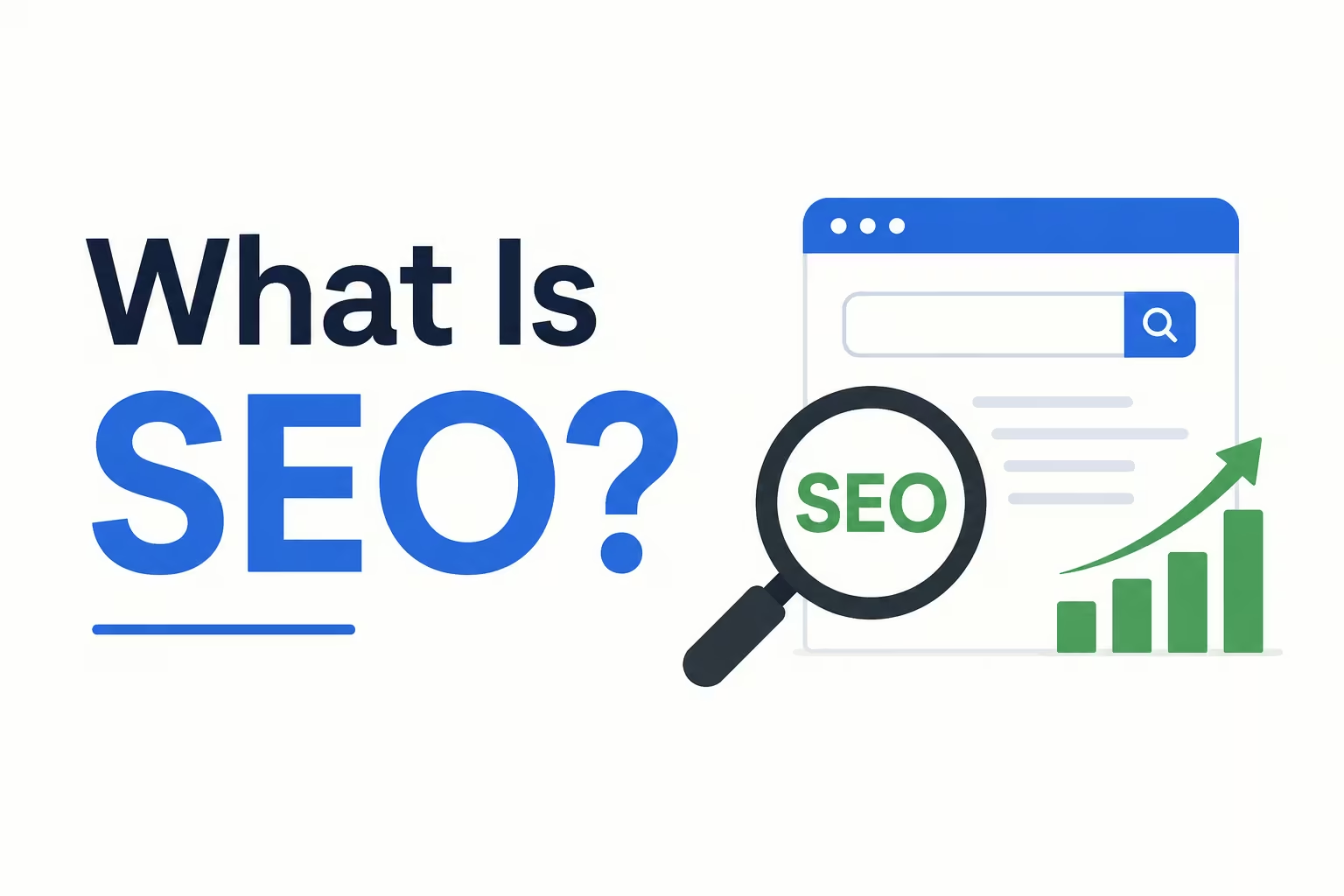
SEO stands for Search Engine Optimization.
In plain English, SEO is the process of improving your website or content so that it appears higher in Google’s search results when someone types in a relevant keyword.
For example, if someone searches “how to make money blogging,” Google shows them a list of results. SEO is what determines which websites appear at the top — and which ones get buried on page 5 where nobody looks.
Here’s a simple way to think about it:
- Google is like a librarian.
- The internet is like a massive library with billions of books.
- SEO is how you make your “book” easy for the librarian to find and recommend.
The higher you rank on Google, the more people visit your website — for free. That’s why SEO is often called organic traffic, because you’re not paying for those clicks like you would with ads.
Why Does SEO Matter for Beginners and Online Business Owners?
Before we go deeper into how SEO works, let’s talk about why you should even care about it.
Here’s the truth: most people never go past the first page of Google. In fact, the first result alone gets about 27% of all clicks. If your content isn’t showing up in that top 10, you’re practically invisible.
SEO matters because:
- It brings free, consistent traffic. Once your content ranks, it keeps bringing visitors — even while you sleep.
- It builds trust and credibility. People trust Google. If Google recommends you, visitors trust you too.
- It’s cost-effective. Unlike paid ads, SEO doesn’t stop working the moment you stop paying.
- It creates long-term results. A well-optimized article can rank and earn traffic for years.
- It opens monetization doors. More traffic means more opportunities to earn through ads, affiliate marketing, products, or services.
Whether you’re a blogger trying to grow your audience, a freelancer building your brand, or an entrepreneur selling products online — SEO is the foundation of sustainable online growth.
How Do Search Engines Work? (The Basics)
To understand SEO, you first need to understand how search engines like Google actually work. It happens in three stages:
1. Crawling
Google uses automated programs called crawlers or spiders to explore the internet. These bots visit web pages, follow links, and discover new content constantly.
Think of it like a robot that’s always traveling from one webpage to another, reading everything it finds.
2. Indexing
After crawling your page, Google stores information about it in a massive database called the index. This is Google’s digital library of all the web pages it knows about.
If your page isn’t indexed, it won’t appear in search results — period.
3. Ranking
When someone types a search query, Google scans its index and ranks the most relevant, trustworthy, and helpful pages. This ranking is determined by Google’s algorithm — a complex system with hundreds of factors.
The goal? Show the searcher the best possible answer to their question.
Understanding these three steps helps you see why SEO isn’t about tricking Google. It’s about making sure your content is easy to crawl, easy to index, and worthy of ranking.
The Three Pillars of SEO (How SEO Actually Works)
SEO has three core components. Think of them as three legs of a stool — you need all three for it to stand.
Pillar 1: On-Page SEO
On-page SEO refers to everything you do on your own website to help it rank.
This includes:
- Keyword research — Finding the exact words and phrases people type into Google.
- Title tags — Writing click-worthy, keyword-rich titles for each page.
- Meta descriptions — Short summaries that appear below your title in search results.
- Headings (H1, H2, H3) — Organizing your content with clear, structured headings.
- Content quality — Writing helpful, in-depth content that actually answers questions.
- Internal linking — Linking to other pages on your own website to keep readers engaged.
- Image optimization — Adding descriptive alt text to images so Google understands them.
- URL structure — Keeping URLs short, clean, and keyword-rich (like /what-is-seo).
Example: If you’re writing a blog post about “healthy breakfast ideas,” your H1 should include that phrase, your URL should reflect it, and your content should genuinely cover the topic better than competitors.
Pillar 2: Off-Page SEO
Off-page SEO refers to everything that happens outside your website that influences your rankings.
The biggest factor here is backlinks — links from other websites pointing to yours.
Why? Because Google treats backlinks like votes of confidence. If 50 trusted websites link to your article, Google sees that as a signal that your content is valuable and worth ranking.
Other off-page SEO factors include:
- Social signals — Shares, mentions, and engagement on social media.
- Brand mentions — When other websites mention your brand even without a link.
- Guest blogging — Writing articles for other websites and earning a link back.
- Influencer outreach — Getting well-known creators to mention or link to your content.
Important warning: Avoid buying cheap backlinks from sketchy websites. Google penalizes sites that use manipulative link-building tactics. Focus on earning links naturally by creating content people genuinely want to share.
Pillar 3: Technical SEO
Technical SEO covers the behind-the-scenes factors that affect how well Google can crawl and index your site.
Key technical SEO elements include:
- Site speed — Google favors fast-loading websites. A slow site loses both rankings and visitors.
- Mobile-friendliness — Over 60% of searches happen on phones. Your site must look great on mobile.
- SSL certificate (HTTPS) — A secure website (https://) is a basic Google requirement.
- XML sitemap — A file that helps Google find and index all your pages.
- Structured data (schema markup) — Code that helps Google understand your content type (recipe, review, FAQ, etc.).
- Core Web Vitals — Google’s set of performance metrics related to loading speed, interactivity, and visual stability.
What Is Keyword Research and Why Does It Matter?
Keyword research is arguably the most important part of SEO — and the best starting point for beginners.
A keyword is simply the phrase someone types into Google.
For example:
- “best laptop for students under 30000”
- “how to start a blog in India”
- “easy side hustles for college students”
Keyword research means finding the right keywords — ones that have decent search volume but aren’t impossibly competitive.
Here’s a basic framework for keyword research:
- Start with your topic. What is your content about?
- Brainstorm seed keywords. These are broad terms related to your topic.
- Use free tools. Google’s own search bar, Google Keyword Planner, Ubersuggest, or AnswerThePublic are great free options.
- Look for long-tail keywords. These are longer, more specific phrases like “how to do SEO for a new blog” instead of just “SEO.” They’re easier to rank for and attract more qualified visitors.
- Check search intent. Ask yourself: what does the person actually want when they type this? Information? A product? A service?
Pro tip: Type your keyword into Google and scroll to the “People Also Ask” section. That’s Google telling you exactly what related questions users are searching for. Answer those in your content.
How Long Does SEO Take to Work?
This is one of the most common questions beginners ask — and the honest answer is: it takes time.
Most websites start seeing meaningful results from SEO within 3 to 6 months. New websites often take longer because they haven’t built authority yet.
Here’s a realistic timeline:
- Month 1–2: Setting up the basics, creating content, technical fixes.
- Month 3–4: Google begins to crawl and index your content.
- Month 5–6: You start seeing small ranking improvements and traffic trickles.
- Month 6–12: Consistent publishing and link building start to pay off with real traffic.
The key message here: SEO is a long game. Don’t expect overnight results. The people who win with SEO are the ones who stay consistent for 6–12 months, even when it feels like nothing is happening.
SEO vs. Paid Ads: What’s the Difference?
A common question for beginners is whether to focus on SEO (organic traffic) or paid advertising like Google Ads.
Here’s a quick comparison:
SEO (Organic Traffic)
- Pros: Free traffic, long-term results, builds trust, compounds over time
- Cons: Takes 3–6 months to see results, requires consistent effort
Paid Ads (PPC)
- Pros: Instant traffic, highly targeted, measurable
- Cons: Costs money, traffic stops the moment you stop paying
The best strategy? Use both — but start with SEO if you’re on a tight budget. Once your SEO brings in steady traffic, you can reinvest some of that revenue into paid ads to scale faster.
How to Start With SEO Right Now (Beginner Action Plan)
You don’t need to master everything at once. Here’s a practical starting point:
Step 1: Set up a website or blog.
Use WordPress, Blogger, or any platform you’re comfortable with. Make sure it loads fast and looks good on mobile.
Step 2: Install an SEO plugin.
If you’re on WordPress, install Yoast SEO or Rank Math. These free tools guide you through optimizing each post.
Step 3: Do basic keyword research.
Find 10–20 keywords related to your niche using free tools. Focus on long-tail keywords with lower competition.
Step 4: Create helpful, in-depth content.
Write content that fully answers your target keyword. Go beyond surface-level information. Use examples, steps, and clear headings.
Step 5: Optimize each post.
Include your keyword in the title, first paragraph, at least one heading, the meta description, and the URL.
Step 6: Build internal links.
When you publish new content, link back to your older relevant posts. This keeps readers on your site longer and helps Google discover your pages.
Step 7: Be consistent.
Publish at least 1–2 times per week. The more high-quality content you produce, the more keywords you can rank for.
Common SEO Mistakes Beginners Should Avoid
Even with the best intentions, beginners often make these mistakes:
- Targeting keywords that are too competitive. Don’t try to rank for “make money online” when you’re just starting. Go niche and specific.
- Ignoring search intent. If someone searches “best running shoes,” they want a list and comparison — not a history of running shoes.
- Keyword stuffing. Repeating your keyword 20 times in one article looks unnatural and can hurt rankings.
- Publishing thin content. Short, low-effort posts rarely rank. Aim for depth and value.
- Skipping the technical basics. A slow website or missing SSL certificate will hold you back no matter how good your content is.
- Expecting instant results. Giving up after 30 days is one of the biggest reasons people fail at SEO.
How SEO Connects to Making Money Online
Here’s the exciting part — especially if you’re looking to earn income online.
SEO and monetization go hand in hand. More traffic = more earning potential.
Once your SEO brings in consistent visitors, you can monetize through:
- Google AdSense — Earn money from display ads shown on your blog.
- Affiliate marketing — Recommend products and earn commissions when readers buy.
- Sponsored posts — Brands pay you to write about their products.
- Selling your own products or services — Courses, ebooks, consulting, or freelance work.
- Email list building — Use your traffic to grow an email list you can market to repeatedly.
The more targeted your SEO traffic, the better your conversion rates. Someone who finds your article by searching “best web hosting for beginners” is far more likely to buy a hosting plan than a random social media visitor.
Conclusion: SEO Is the Skill That Keeps Giving
So, what is SEO and how does it work? In simple terms, SEO is the art and science of helping your content get found on Google — without paying for ads.
It works through three pillars: on-page SEO (optimizing your content), off-page SEO (building backlinks and authority), and technical SEO (making your site fast and crawlable).
The best time to start with SEO was yesterday. The second best time is today.
Start small. Pick a niche you care about. Do basic keyword research. Write helpful content. Be consistent. And give it time.
SEO rewards patience and persistence more than perfection. Even if you learn just one new SEO technique each week, you’ll be miles ahead of most beginners within six months.
Your free traffic journey starts now.
Frequently Asked Questions (FAQs)
Q1: What is SEO in simple words?
SEO (Search Engine Optimization) is the process of improving your website so that it appears higher in Google’s search results, helping more people find your content for free.
Q2: How does SEO work step by step?
SEO works through three steps: Google crawls your site, indexes your content, and then ranks it based on relevance, quality, and authority. You improve rankings by optimizing your content, building backlinks, and fixing technical issues.
Q3: Is SEO free?
The practice of SEO itself is free — you don’t pay Google to rank higher. However, you may invest in tools, content creation, or professional help. Organic traffic from SEO costs nothing per click, unlike paid ads.
Q4: How long does SEO take to show results?
Most beginners start seeing noticeable SEO results between 3 and 6 months. New websites can take up to 12 months depending on the competition and how consistently they publish content.
Q5: Can I learn SEO on my own?
Absolutely. SEO is one of the most self-teachable digital skills. Free resources from Google, YouTube tutorials, and SEO blogs can teach you everything you need. Practice on your own website as you learn.
Q6: What is the difference between on-page and off-page SEO?
On-page SEO refers to optimizations you make directly on your website — like keyword usage, content quality, and headings. Off-page SEO refers to external factors like backlinks from other websites.
Q7: Is SEO still relevant in 2026?
Yes — more than ever. With billions of searches happening every day, ranking on Google remains one of the most powerful ways to drive free, targeted traffic to any website or online business.
Q8: What tools should beginners use for SEO?
Great free tools for beginners include Google Search Console, Google Keyword Planner, Ubersuggest, AnswerThePublic, and the Yoast SEO or Rank Math plugins for WordPress.
Recommended posts:
- How to Write SEO Titles That Actually Rank on Google (Beginner’s Guide)
- Off-Page SEO Explained: The Complete Beginner’s Guide to Building Authority and Rankings
- What Is E-E-A-T in SEO? The Complete Beginner’s Guide (2026)
- How to Start an Online Business with Low Investment (Complete Beginner;s Guide 2026)
- How to Become a Virtual Assistant in 2026 (Complete Beginner’s Guide)