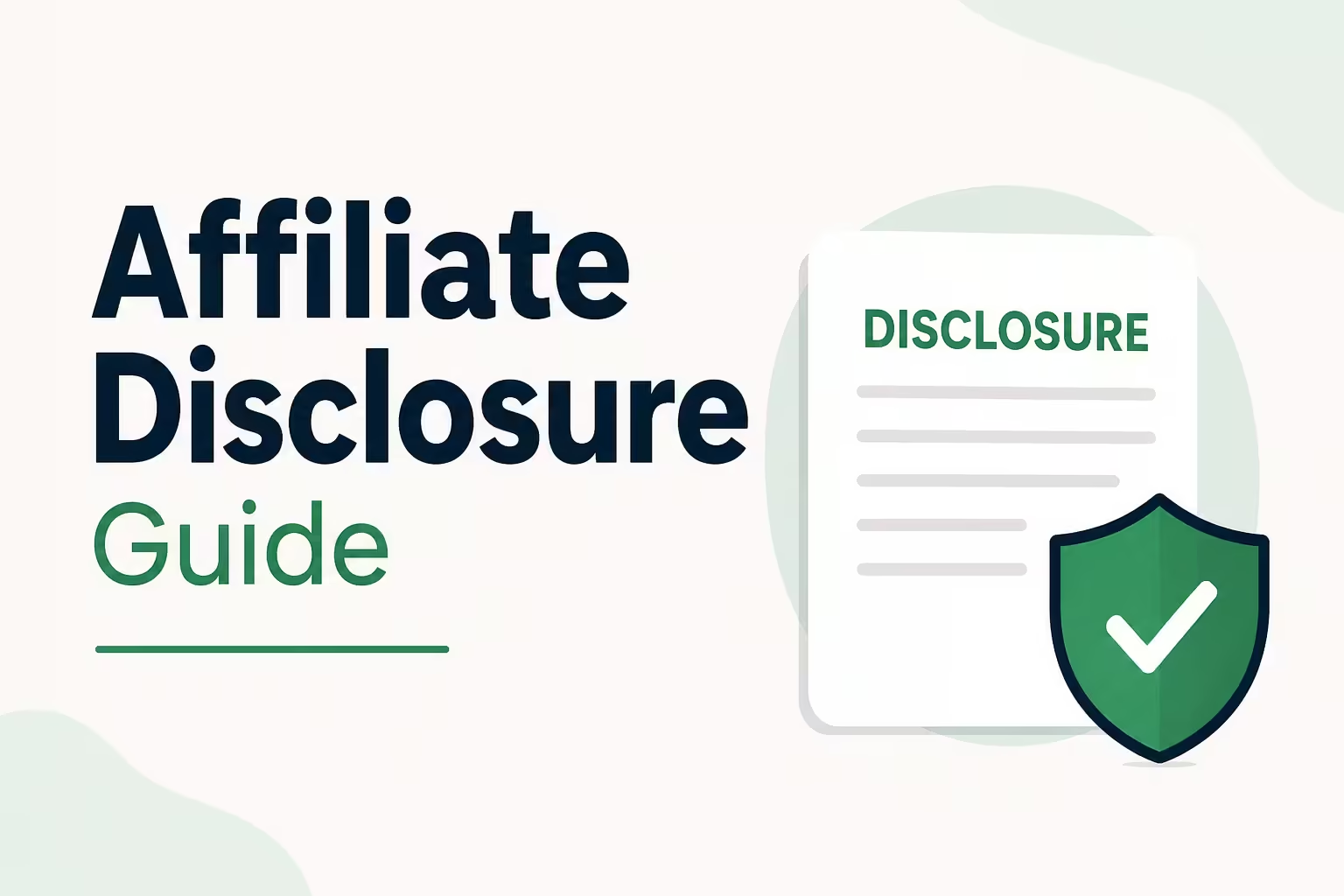
Introduction: Why Every Blogger Needs an Affiliate Disclosure
If you run a blog, YouTube channel, or social media page and promote products for commission, you need an affiliate disclosure. Period.
No exceptions.
An affiliate disclosure is a short statement that tells your audience you may earn money if they click your links and buy something. It sounds simple, but skipping it can get you in serious legal trouble — and cost you your audience’s trust.
The good news? Writing a proper affiliate disclosure takes less than 10 minutes. And once it’s done, it protects you legally, builds trust with your readers, and keeps you compliant with FTC (Federal Trade Commission) rules.
This guide covers everything you need to know about affiliate disclosures — from what they are to exactly where to place them.
Let’s get into it.
Find similar topics in Affiliate Marketing category.
What Is an Affiliate Disclosure?
An affiliate disclosure is a clear statement that tells your readers you have a financial relationship with the brands or products you recommend.
In plain terms: you’re letting people know that if they click your link and buy something, you get a small commission — at no extra cost to them.
Example of a simple affiliate disclosure:
“This post contains affiliate links. If you click a link and make a purchase, I may earn a small commission at no extra cost to you. Thank you for supporting this blog!”
That’s it. Simple, honest, and effective.
Affiliate disclosures are required by law in many countries, including the United States, the United Kingdom, Canada, and Australia. They’re not optional suggestions — they’re legal obligations for anyone earning money through affiliate marketing.
Why Is an Affiliate Disclosure Required by Law?
The FTC (Federal Trade Commission) in the US has clear guidelines: if you have a “material connection” to a brand — meaning you earn money, receive free products, or get any kind of compensation — you must disclose it.
The idea is simple. Consumers have a right to know when someone is being paid to recommend something.
Here’s why this matters legally:
- The FTC can fine you for failing to disclose affiliate relationships
- Amazon Associates will ban your account if you don’t follow their disclosure rules
- Other affiliate programs like Awin, CJ Affiliate, and Rakuten also require proper disclosures
- GDPR in Europe has similar transparency requirements
The FTC has sent warning letters and issued fines to influencers, bloggers, and major brands for failing to disclose paid promotions. This is not a gray area. The rules are clear.
Quick warning: Don’t bury your disclosure in tiny font at the bottom of a 3,000-word post. The FTC says it must be “clear and conspicuous.” That means easy to see and easy to understand.
Who Needs an Affiliate Disclosure?
You need an affiliate disclosure if you:
- Run a blog and include affiliate links in your posts
- Create YouTube videos and include affiliate links in descriptions
- Post on Instagram, TikTok, or Pinterest and earn commissions from links
- Send email newsletters with affiliate product recommendations
- Run a podcast and mention affiliate sponsors
- Write product reviews on any platform
- Create comparison guides or “best of” lists with monetized links
Even if you only have one affiliate link on your entire website, you still need a disclosure. The size of your audience doesn’t matter. The number of links doesn’t matter. If there’s a financial relationship, you disclose it.
What Should an Affiliate Disclosure Include?
A proper affiliate disclosure doesn’t need to be complicated. But it does need to cover a few key points.
Your affiliate disclosure should clearly state:
- That you use affiliate links
- That you may earn a commission if someone clicks and buys
- That there is no extra cost to the reader
- (Optional but recommended) That your opinions are your own
Here’s what each of those looks like in practice:
Basic version:
“This post contains affiliate links. I earn a small commission if you purchase through my links.”
Better version:
“This post contains affiliate links, meaning I may earn a small commission if you click a link and make a purchase — at no additional cost to you. I only recommend products I genuinely use and love.”
Full version:
“Disclosure: Some links in this post are affiliate links. This means that if you click on the link and purchase an item, I may receive an affiliate commission. I only recommend products or services I personally use and believe will add value to my readers. All opinions expressed here are my own.”
All three versions are acceptable. The longer version builds more trust. Choose based on your brand voice.
Where Should You Place Your Affiliate Disclosure?
This is where many beginners make mistakes. Placement matters just as much as the words.
The FTC requires the disclosure to be:
- Clear — easy to read and understand
- Conspicuous — easy to see without scrolling or searching for it
- Close to the affiliate links — ideally before or near the first affiliate link
Here’s where to put your affiliate disclosure:
1. At the Top of Every Blog Post
Put the disclosure at the very beginning of any post that contains affiliate links. Before the reader sees any links, they should see the disclosure.
Example placement: Right after the post introduction, inside a highlighted box or bold text.
2. On a Dedicated Disclosure Page
Create a separate page on your website titled “Affiliate Disclosure” or “Disclosure Policy.” Link to it in your footer, navigation menu, and within individual posts.
3. In Your Website Footer
A brief note in the footer — like “This site contains affiliate links. See our Disclosure Policy for details.” — covers you site-wide.
4. In YouTube Video Descriptions
Place the disclosure at the very start of your description, before any links. Don’t write it 10 paragraphs down where no one will see it.
5. In Email Newsletters
Include a short line near the top of any email that contains affiliate links. Something like: “Some links below are affiliate links — I may earn a commission at no cost to you.”
6. On Social Media Posts
For Instagram or TikTok, add #ad or #affiliate in a visible spot. Don’t hide it among 20 other hashtags at the bottom.
Affiliate Disclosure Examples You Can Copy and Use
Here are ready-to-use templates for different platforms. Feel free to customize them for your brand.
For Blog Posts:
“This post may contain affiliate links. If you make a purchase through these links, I may earn a small commission at no extra cost to you. Thank you for your support — it helps keep this blog running!”
For Product Reviews:
“Full disclosure: This post contains affiliate links. I only review products I have personally used. If you buy through my links, I earn a commission — but my reviews are always honest and unsponsored by the brand.”
For “Best Of” or Comparison Posts:
“Heads up: Some of the links in this roundup are affiliate links. I earn a small fee if you purchase through them. This doesn’t affect which products I recommend — I only include items I’d genuinely suggest to a friend.”
For Email Newsletters:
“Quick note: This email may contain affiliate links. I may earn a commission if you click and buy, at no extra cost to you.”
For YouTube:
“Some links in the description below are affiliate links. I earn a small commission if you purchase through them — it helps support the channel. Thanks!”
For Social Media (Instagram/TikTok):
“#ad — This is an affiliate link. I may earn a commission if you purchase.”
Common Affiliate Disclosure Mistakes to Avoid
Even bloggers who know they need a disclosure often get it wrong. Here are the most common mistakes:
Mistake #1: Burying the disclosure at the bottom
Putting it at the very end of a 2,000-word post doesn’t count as “conspicuous.” The FTC specifically calls this out.
Mistake #2: Using vague language
Saying “this post may contain links” without explaining what those links are is not enough. Be specific. Say “affiliate links” and explain what that means.
Mistake #3: Only having a disclosure page
A disclosure page is important, but it doesn’t replace in-content disclosures. You need both.
Mistake #4: Not updating your disclosure
If you join a new affiliate program, make sure your disclosure still covers it. A generic disclosure that mentions “various affiliate programs” is fine, but be sure it’s accurate.
Mistake #5: Forgetting social media
Many bloggers have disclosures on their websites but forget completely about their Instagram or TikTok posts. Every platform counts.
Mistake #6: Making it sound scary
Your disclosure doesn’t need to be formal or intimidating. A friendly tone actually builds trust. Something like: “Hey, just so you know — some links here are affiliate links!” works perfectly.
Does an Affiliate Disclosure Hurt Your Conversions?
This is one of the most common fears among beginner affiliate marketers. The short answer: No.
In fact, the opposite is often true.
A clear, honest disclosure:
- Builds trust with your readers
- Shows professionalism and transparency
- Increases click-through rates because readers feel confident in your recommendations
- Reduces refund rates because buyers feel informed
Studies consistently show that people prefer buying from creators they trust. A disclosure signals honesty. And honest creators build loyal audiences that convert better over time.
The only people who worry about disclosures hurting sales are people who were relying on hiding the fact they’re being paid. That’s not a sustainable business model — and it’s not ethical.
How to Create a Full Affiliate Disclosure Page
Here’s a step-by-step process to set up your disclosure page today.
Step 1: Go to your blogging platform (WordPress, Squarespace, Wix, etc.)
Step 2: Create a new static page titled “Affiliate Disclosure” or “Disclosure Policy”
Step 3: Write your disclosure (use one of the templates above as a starting point)
Step 4: Add your name, blog name, and date last updated
Step 5: Publish the page
Step 6: Link to it from your:
- Website footer
- Privacy policy page
- Navigation menu (optional but recommended)
- Individual blog posts that contain affiliate links
Step 7: Add a short in-post disclosure at the top of every affiliate post, linking back to your full disclosure page
That’s the complete setup. It takes under 30 minutes and protects you permanently.
Affiliate Disclosure for Amazon Associates
If you’re in the Amazon Associates program specifically, there are additional requirements beyond the standard FTC rules.
Amazon requires you to:
- Include a specific statement that you are “a participant in the Amazon Services LLC Associates Program”
- State that the program is “an affiliate advertising program designed to provide a means for sites to earn advertising fees by advertising and linking to Amazon.com”
- Place this disclosure visibly on your website
Here’s the exact language Amazon recommends:
“[Blog Name] is a participant in the Amazon Services LLC Associates Program, an affiliate advertising program designed to provide a means for sites to earn advertising fees by advertising and linking to Amazon.com.”
You must use language similar to this. Don’t just write a generic disclosure and assume it covers Amazon. Their terms are specific, and violating them can get your account suspended.
Conclusion: Your Affiliate Disclosure Checklist
Getting your affiliate disclosure right is one of the most important steps you can take as a blogger or content creator. It protects you legally, builds trust with your audience, and keeps your affiliate accounts in good standing.
Here’s a quick checklist to make sure you’re covered:
- Written a clear affiliate disclosure that mentions commissions, no extra cost to reader, and honest opinions
- Added disclosure at the top of every post with affiliate links
- Created a dedicated Affiliate Disclosure page on your website
- Linked to the disclosure page from your footer
- Added disclosures to YouTube video descriptions
- Added #ad or #affiliate to social media posts
- Used the correct Amazon Associates disclosure language (if applicable)
- Reviewed your disclosure for clarity and plain language
An affiliate disclosure is not just a legal requirement — it’s a foundation of trust. The most successful affiliate marketers are transparent ones. Start right, stay honest, and your audience will reward you for it.
FAQs: Affiliate Disclosure Guide
Q1: Is an affiliate disclosure legally required?
Yes. In the United States, the Federal Trade Commission (FTC) requires all bloggers, influencers, and content creators to disclose material connections, including affiliate relationships. Similar laws exist in the UK (ASA guidelines), Canada (Competition Bureau), and Australia (ACCC).
Q2: What happens if I don’t have an affiliate disclosure?
The FTC can issue warnings, require compliance, and in serious cases, impose fines. Affiliate programs like Amazon Associates can also suspend or permanently ban your account for non-compliance.
Q3: Does an affiliate disclosure need to be long?
No. A single sentence is enough, as long as it clearly states that affiliate links are present and that you may earn a commission. Length is less important than clarity and placement.
Q4: Can I use one disclosure for my whole website?
A site-wide disclosure page is important, but it doesn’t replace individual in-post disclosures. The FTC wants the disclosure to be near the content it relates to — not buried on a separate page.
Q5: Do I need a disclosure for free products too?
Yes. If you received a product for free in exchange for a review — even if there’s no cash commission — that’s still a material connection and must be disclosed.
Q6: Does my affiliate disclosure need to use specific legal language?
Not exactly. The FTC doesn’t mandate specific wording, but it must be “clear and conspicuous” and easy to understand for the average reader. Plain, simple language is actually preferred.
Q7: Where should I put my affiliate disclosure on social media?
At the beginning of your caption — not buried in hashtags. Use terms like #ad, #affiliate, or “Affiliate link” clearly and visibly.
Recommended posts:
- How to Promote Affiliate Links Without Spamming (The Right Way)
- Best Affiliate Programs for Beginners: Your Complete Guide to Earning Online in 2026
- Common Affiliate Marketing Mistakes That Are Costing You Money (And How to Fix Them)
- Beginner’s Guide to Affiliate Marketing: How to Start Earning Online in 2026