Introduction: Why Digital Products Are the Smartest Way to Make Money Online
If you’ve been searching for a way to earn money online without shipping boxes or managing inventory, digital products might be exactly what you need.
Digital products are files or content you create once and sell unlimited times. No storage costs. No delivery headaches. And yes — you can earn while you sleep.
Whether you’re a student, a blogger, a freelancer, or someone just starting out, the best digital products to create and sell don’t require a big budget or a tech degree. You just need the right idea, a little effort, and the courage to start.
In this guide, you’ll discover the top digital products you can create today, how to sell them, and which ones match your skills and goals.
Let’s dive in.
Find similar topics in Digital Products category.
What Are Digital Products and Why Should You Sell Them?
A digital product is any product delivered electronically. Think eBooks, templates, courses, music, software, printables, and more.
Here’s why they’re so popular right now:
- Zero inventory — you never run out of stock
- Low startup costs — most can be created with free tools
- Passive income potential — sell the same product repeatedly
- Global reach — sell to anyone, anywhere
- High profit margins — no manufacturing or shipping costs
According to market research, the global digital products market is growing rapidly, with millions of creators earning full-time income from digital downloads alone.
Quick Reality Check: Digital products are not a get-rich-quick scheme. Success takes time, consistency, and marketing. But the earning potential is very real.
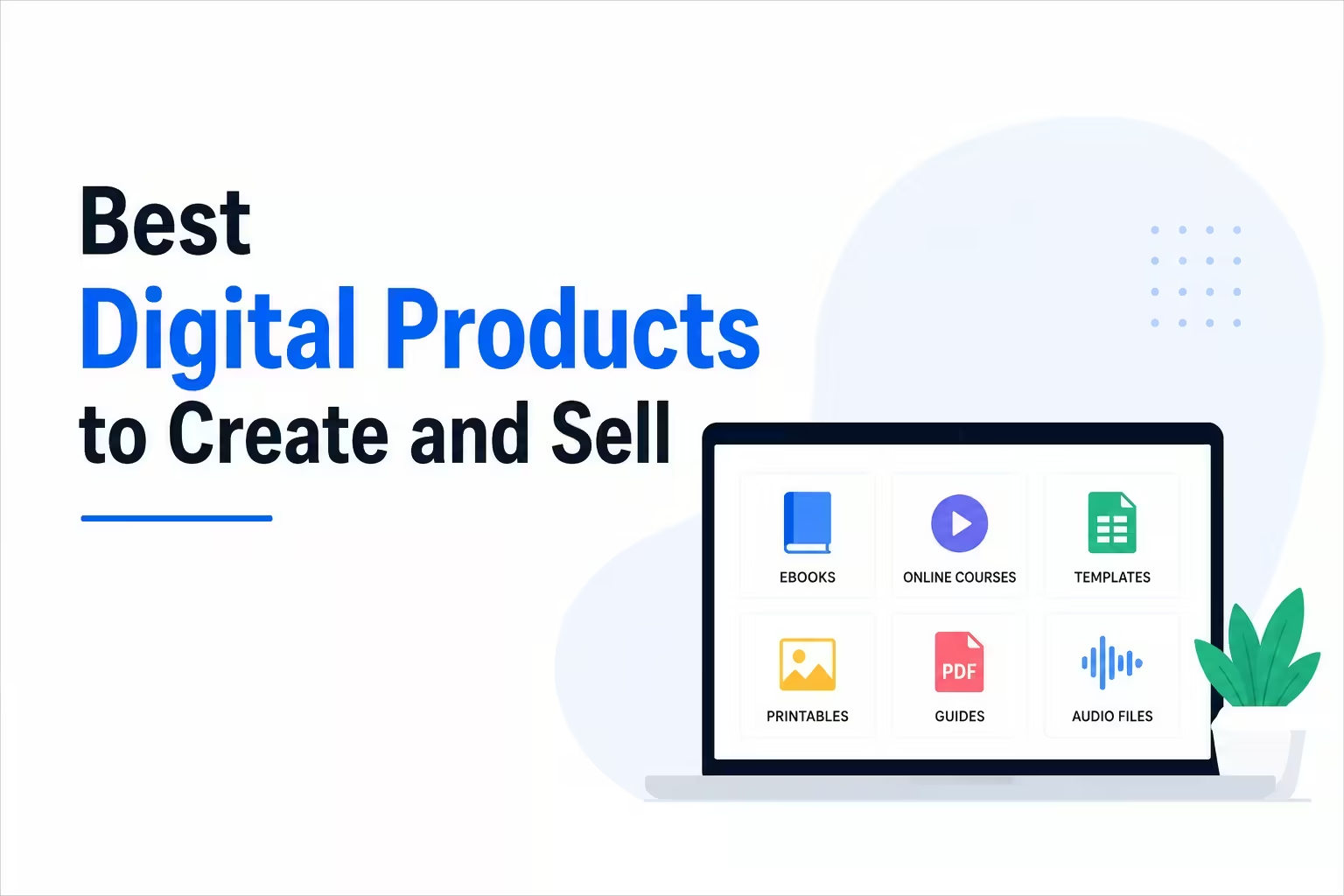
The Best Digital Products to Create and Sell Right Now
1. eBooks — The Classic Beginner-Friendly Digital Product
eBooks are one of the most popular and easiest digital products to start with, especially for writers, bloggers, and coaches.
What kind of eBooks sell well?
- How-to guides (e.g., “How to Start a Blog in 30 Days”)
- Recipes and meal plans
- Personal finance tips
- Self-help and productivity
- Niche tutorials (e.g., beginner photography, budgeting for students)
How to create one: Use Google Docs or Canva to write and design your eBook. Export it as a PDF. Done.
Where to sell: Amazon Kindle Direct Publishing, Gumroad, Payhip, or your own website.
Earning potential: $5 to $50 per sale. Some niche eBooks earn creators thousands of dollars per month.
Pros:
- Easy to create
- Low-cost tools available
- Great for building authority
Cons:
- Highly competitive
- Needs strong marketing
2. Online Courses — High-Value, High-Income Digital Products
If you know how to do something — cooking, coding, graphic design, English grammar, fitness — you can teach it online and charge for it.
Online courses are one of the highest-earning digital products available. Why? Because people pay premium prices to learn valuable skills quickly.
Popular course topics in 2026:
- Social media marketing
- Freelancing and remote work skills
- Web development basics
- English communication
- Personal finance and investing
- Yoga and mindfulness
Tools to create your course: Teachable, Thinkific, Kajabi, or even Udemy (which brings its own audience).
Earning potential: $50 to $2,000+ per course. Many creators earn $5,000–$20,000 per month from courses alone.
Pro Tip: You don’t need to be a world-class expert. You just need to be a few steps ahead of your student.
3. Printables and Templates — Quick to Create, Easy to Sell
Printables are digital files customers download and print at home. They’re incredibly popular on platforms like Etsy and Pinterest.
Best-selling printable ideas:
- Budget planners and expense trackers
- Daily/weekly planner pages
- Wedding checklists
- Resume templates
- Study planners for students
- Habit trackers
- Kids’ activity sheets
Tools to create printables: Canva (free version works perfectly), Adobe Illustrator, or Microsoft PowerPoint.
Where to sell: Etsy is the go-to platform for printables. Many sellers earn $1,000–$5,000 per month from a library of printable products.
Earning potential: $2 to $15 per file, but volume is key. One popular printable can sell hundreds of times every month.
4. Stock Photos and Digital Art — Sell Your Creativity
If you love photography or graphic design, you can turn your creative work into a steady income stream.
What sells well:
- High-quality lifestyle photos
- Business and workspace photos
- Digital illustrations
- Social media graphics
- Clip art and design elements
- Wallpapers and backgrounds
Where to sell: Shutterstock, Adobe Stock, Etsy, and Creative Market are the top platforms.
Earning potential: Royalties range from $0.25 to $10+ per download depending on the platform and license type.
Important note: Build a large portfolio. The more images you upload, the more passive income potential you have.
5. Notion Templates and Productivity Tools
Notion has exploded in popularity, and with it, a booming market for Notion templates.
Entrepreneurs, students, and remote workers are constantly looking for ready-made systems they can plug right into their workflow.
Top-selling Notion templates:
- Project management dashboards
- Content calendars for creators
- Student study planners
- Personal finance trackers
- CRM (client relationship management) systems for freelancers
Tools needed: Just a free Notion account and your creativity.
Where to sell: Gumroad, Etsy, your own website, or the Notion Template Gallery.
Earning potential: $5 to $99 per template. Some creators bundle templates and sell packages for $200+.
6. Canva Templates — Perfect for Designers and Non-Designers Alike
Canva templates are pre-designed files that buyers can easily customize. This market is booming because almost every business owner, blogger, and social media manager uses Canva.
Most in-demand Canva templates:
- Instagram post and story templates
- Pinterest graphics
- YouTube thumbnails
- Presentation decks
- Media kits for bloggers and influencers
- Business card designs
Where to sell: Creative Market, Etsy, and Gumroad are the best platforms.
Earning potential: $7 to $49 per pack. Selling bundles significantly increases average order value.
7. Music, Sound Effects, and Audio Files
This one is for the musicians, podcasters, and audio producers out there.
Demand for royalty-free music and sound effects is growing fast — driven by YouTubers, podcasters, advertisers, and app developers.
What to create:
- Background music for videos
- Podcast intro and outro music
- Ambient soundscapes (study music, nature sounds)
- Sound effects packs
- Meditation and relaxation tracks
Where to sell: Pond5, AudioJungle (Envato Market), Bandcamp, and Gumroad.
Earning potential: $5 to $100 per track or pack.
8. Software, Plugins, and Tools
If you have coding skills, digital tools are among the highest-earning products online.
You don’t need to build the next big app. Even small, niche tools that solve a specific problem can generate significant income.
Ideas for developers:
- WordPress plugins
- Chrome browser extensions
- Shopify apps
- Excel or Google Sheets automation templates
- Productivity scripts and bots
Where to sell: CodeCanyon (Envato), Gumroad, Product Hunt, or your own website.
Earning potential: $10 to $200+ per license. Subscription-based tools generate recurring monthly income.
9. Swipe Files, Guides, and Resource Libraries
A swipe file is a collection of examples, scripts, or proven resources that people can use directly in their work.
Marketers, writers, and entrepreneurs love these because they save time.
Popular swipe file ideas:
- Email marketing subject line collections (100 proven subject lines)
- Social media caption packs
- Sales page copywriting scripts
- Cold email outreach templates
- SEO checklist PDFs
Where to sell: Gumroad, Payhip, or as a paid newsletter upgrade.
Earning potential: $9 to $99 per pack.
10. Membership Sites and Exclusive Content Communities
Instead of selling one product at a time, a membership site lets you charge a recurring monthly fee for ongoing value.
This is one of the best ways to build predictable, recurring income.
What to offer inside a membership:
- Monthly exclusive tutorials
- Private community access
- Live Q&A sessions
- Templates and resources updated regularly
- Coaching or feedback
Tools to build one: Patreon, Memberful, Kajabi, or Substack (for content-based memberships).
Earning potential: Even 100 members paying $10/month = $1,000/month in recurring income.
How to Choose the Right Digital Product for You
Not sure where to start? Ask yourself these questions:
- What do I know well? — Your knowledge, hobby, or profession can become a product.
- What do people ask me about regularly? — That’s a sign there’s demand.
- How much time do I have? — eBooks and printables are faster to create than courses.
- What skills do I have? — Designers might start with templates. Writers might start with eBooks.
- What can I create once and sell repeatedly? — That’s your sweet spot.
Where to Sell Your Digital Products
You have three main options:
1. Use an existing marketplace:
- Etsy (printables, templates)
- Gumroad (almost anything)
- Udemy (courses)
- Amazon KDP (eBooks)
Pros: Built-in audience. Cons: Platform fees and less control.
2. Build your own website: Use WordPress + WooCommerce or Shopify Digital Downloads to sell directly. You keep more profit and own your customer list.
3. Use a hybrid approach: Start on a marketplace to get sales and reviews. Then build your own site to scale without fees.
Common Mistakes Beginners Make (And How to Avoid Them)
- Waiting for perfection — Launch an imperfect product. Improve it later.
- Skipping research — Make sure people actually want your product before you create it.
- Ignoring marketing — A great product with no promotion earns nothing. Learn basic SEO and social media.
- Underpricing — Don’t race to the bottom on price. Value your work.
- Trusting shady “gurus” — Anyone promising overnight riches is likely selling false hope.
Quick-Start Action Plan for Beginners
Here’s how to get started this week:
- Pick one product type that matches your skills
- Research your niche using Google, Etsy, or Amazon
- Create your first product using free tools (Canva, Google Docs, Notion)
- Set up a free Gumroad account and list your product
- Share it on social media, Pinterest, or in a relevant online community
- Collect feedback and improve
That’s it. No fancy setup. No big investment. Just action.
Conclusion: Start Selling Digital Products Today
The best digital products to create and sell are the ones you actually start working on. Whether it’s a simple planner printable, a Notion template, or an eBook about something you know well — every successful creator started with a single product.
The opportunity is real. The tools are free or affordable. The global audience is waiting.
Stop overthinking. Pick one product from this list. Create it. Launch it. And learn as you go.
Your digital income journey starts with a single step — and that step can start today.
Frequently Asked Questions (FAQs)
Q1: What is the easiest digital product to create and sell for beginners?
Printables and eBooks are the easiest to start with. They require no technical skills and can be created using free tools like Canva or Google Docs.
Q2: Can I sell digital products with no money?
Yes. Platforms like Gumroad and Payhip are free to start. You can create products using free tools and begin selling with zero upfront cost.
Q3: How much money can you make selling digital products?
Income varies widely. Beginners might earn $100–$500 per month starting out. Experienced sellers often earn $3,000–$20,000+ per month depending on niche, product quality, and marketing.
Q4: Do I need a website to sell digital products?
Not immediately. You can use Gumroad, Etsy, or Payhip to start. A website becomes useful once you’re ready to scale and want full control over your business.
Q5: What digital products are in the highest demand in 2026?
Online courses, Notion templates, Canva templates, and digital planners are among the most in-demand products right now.
Q6: Are digital products passive income?
Yes, to a large extent. Once created and listed, a digital product can earn money without ongoing effort — though marketing and updating your catalog improves long-term results.
Q7: Is selling digital products legal?
Absolutely. Just make sure your products don’t violate copyright laws, and that you have the rights to sell any content, images, or tools you include.
Recommended posts:
- Best Affiliate Programs for Beginners: Your Complete Guide to Earning Online in 2026
- How to Create a Content Strategy for a Blog (Step-by-Step Guide for Beginners)
- How to Find Freelance Clients: The Complete Beginner’s Guide (2026)
- How to Make Your First $100 Blogging (Step-by-Step Guide for Beginners)